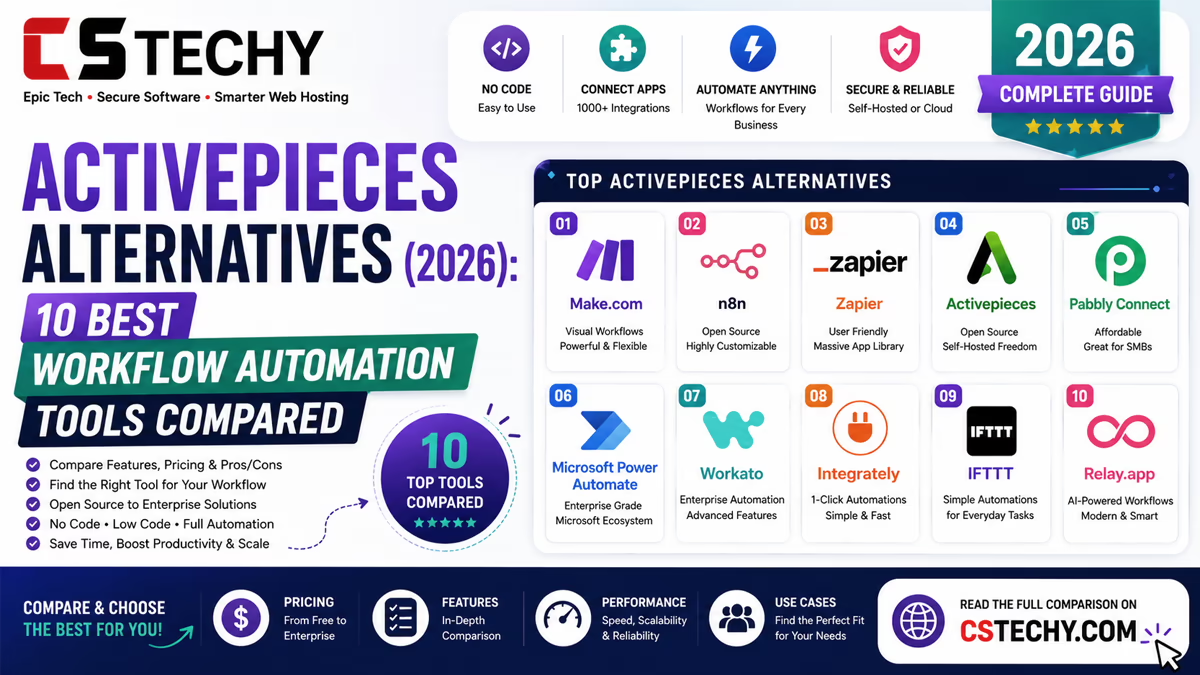
Activepieces Alternatives (2026): 10 Best Workflow Automation Tools Compared
Meta Description: Discover the best Activepieces alternatives in 2026. Compare Zapier, Make.com, n8n, Pabbly Connect, Workato, and more to choose the ideal workflow automation platform.
SEO URL: /activepieces-alternatives/
If you’re searching for the best Activepieces alternatives, you’re not alone. While Activepieces has become a popular open-source workflow automation platform, it isn’t the perfect solution for everyone. Some users need more integrations, others prefer a visual workflow builder, and many businesses require advanced collaboration, enterprise security, or AI-powered automation.
The good news is that the workflow automation market has evolved rapidly. Whether you’re a freelancer, small business owner, developer, agency, or enterprise team, there are several excellent alternatives that may better fit your workflow and budget.
In this guide, we’ll compare the top Activepieces competitors, explain their strengths and weaknesses, discuss pricing, and help you choose the best automation platform for your specific needs.
Why Look for Activepieces Alternatives?
Activepieces is an impressive automation platform that combines open-source flexibility with a modern visual workflow editor. It offers hundreds of integrations, AI capabilities, and self-hosting options, making it attractive for developers and growing businesses.
However, no automation tool is perfect. As your business grows, your requirements may change. Some users need enterprise-grade security, while others prioritize thousands of integrations, faster workflow execution, or easier collaboration between teams.
Choosing the right workflow automation software depends on your budget, technical experience, and business goals.
Common Reasons Users Switch
- Need more app integrations.
- Looking for advanced AI automation.
- Require enterprise security and governance.
- Need easier workflow building.
- Want larger template libraries.
- Looking for cheaper pricing.
- Need better customer support.
- Want advanced scheduling and monitoring.
- Require team collaboration features.
- Need scalable enterprise automation.
Fortunately, today’s automation market offers solutions for every type of user, from beginners creating simple workflows to enterprises managing thousands of automated processes every day.
What Makes a Great Workflow Automation Platform?
Before comparing alternatives, it’s important to understand what separates a good automation platform from a great one.
Easy Workflow Builder
A visual drag-and-drop editor allows users to create automations without writing code. Beginners can automate repetitive tasks quickly, while advanced users can still customize complex workflows.
Large Integration Library
The more applications a platform supports, the more valuable it becomes. Popular integrations include Gmail, Slack, Google Sheets, Trello, Notion, HubSpot, Shopify, Salesforce, Stripe, Airtable, Discord, Microsoft Teams, and hundreds of SaaS applications.
AI Features
Modern automation platforms increasingly include AI capabilities such as content generation, intelligent routing, document processing, chatbot automation, and AI agents.
Templates
Ready-made workflow templates save hours of setup time. Businesses can deploy proven automations instead of building everything from scratch.
Scalability
The best automation tools grow alongside your business. Whether you execute hundreds or millions of workflow runs every month, performance and reliability remain essential.
Security
Organizations handling customer information require encryption, role-based permissions, audit logs, compliance certifications, and secure API management.
Pricing
Pricing should remain affordable while delivering enough features for long-term growth. Some businesses prefer subscription-based SaaS platforms, while others reduce costs through self-hosted automation.
1. Zapier
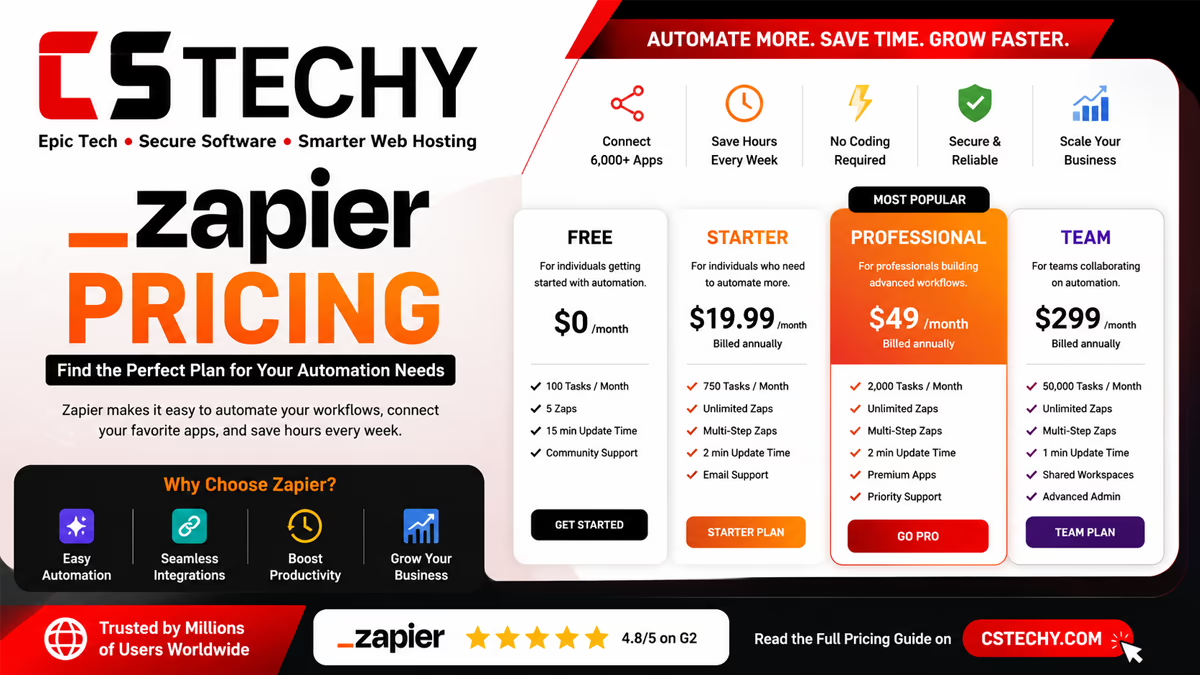
Zapier remains the world’s most popular workflow automation platform. It connects thousands of applications without requiring programming knowledge, making it ideal for beginners and growing businesses.
Overview
Zapier focuses on simplicity. Users create “Zaps” that automatically move information between applications whenever a trigger occurs. Businesses use Zapier to automate marketing, customer support, sales, accounting, HR, and daily operations.
Best For
- Small businesses
- Marketing teams
- Sales teams
- Freelancers
- Agencies
- Non-technical users
Key Features
- Thousands of app integrations.
- AI-powered workflow builder.
- Multi-step automations.
- Built-in AI assistants.
- Conditional logic.
- Formatter utilities.
- Premium workflow templates.
- Team collaboration.
- Enterprise security.
- Extensive documentation.
Pros
- Extremely beginner friendly.
- Largest integration ecosystem.
- Excellent reliability.
- Strong AI features.
- Large community support.
Cons
- Higher pricing than competitors.
- Advanced workflows can become expensive.
- Limited self-hosting options.
Why Choose Zapier Over Activepieces?
If your business depends on connecting hundreds of SaaS applications with minimal setup, Zapier offers unmatched convenience. Its mature ecosystem, AI enhancements, and enormous template library make it one of the easiest automation platforms available.
2. Make.com
Make.com is one of the strongest competitors to Activepieces. It combines an elegant visual workflow designer with advanced automation capabilities suitable for both beginners and experienced automation professionals.
Overview
Unlike simpler automation tools, Make.com allows users to create sophisticated scenarios involving branching logic, routers, filters, iterators, aggregators, and advanced data transformations.
Best For
- Power users
- Growing businesses
- Agencies
- Developers
- Complex workflows
Key Features
- Visual scenario builder.
- Advanced workflow logic.
- Thousands of integrations.
- HTTP modules.
- API connectivity.
- Scheduling options.
- Error handling.
- Custom variables.
- Real-time execution monitoring.
Pros
- Very powerful workflow engine.
- Excellent visual interface.
- Affordable compared to Zapier.
- Highly flexible automation.
Cons
- Learning curve for beginners.
- Complex scenarios require planning.
Why Choose Make.com Over Activepieces?
If you regularly build sophisticated business workflows involving multiple branches, advanced filtering, APIs, and data processing, Make.com offers greater flexibility than many no-code automation platforms.
3. n8n
n8n has become the preferred choice for developers, DevOps teams, AI engineers, and organizations seeking complete control over workflow automation.
Overview
As an open-source automation platform, n8n supports both cloud hosting and self-hosting. Users can customize workflows, write JavaScript, connect APIs, and deploy automation infrastructure within their own environments.
Best For
- Developers
- AI automation
- Self-hosting
- Technical teams
- Enterprise customization
Key Features
- Open-source architecture.
- Self-hosted deployment.
- AI agent workflows.
- JavaScript support.
- API integrations.
- Custom nodes.
- Webhook automation.
- Version control compatibility.
- Flexible execution options.
Pros
- Highly customizable.
- Developer friendly.
- Excellent AI integration support.
- Strong open-source community.
- Lower long-term infrastructure costs.
Cons
- Requires technical knowledge.
- Self-hosting involves server management.
- Less beginner friendly than Zapier.
Why Choose n8n Over Activepieces?
Organizations requiring complete ownership of their automation infrastructure often prefer n8n because of its extensive customization options, active developer community, and powerful AI workflow capabilities.
4. Pabbly Connect
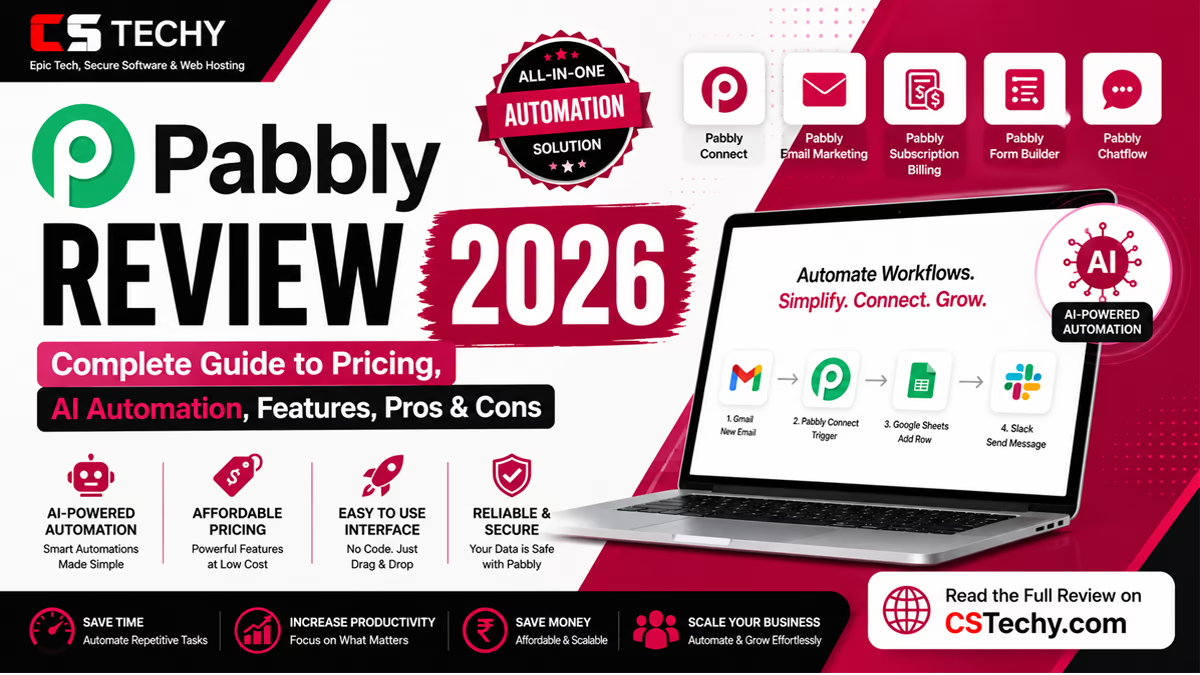
Pabbly Connect has become one of the most popular Activepieces alternatives for businesses that want affordable workflow automation without sacrificing essential features. Unlike many competitors that charge based on individual tasks, Pabbly focuses on predictable pricing and unlimited workflow creation on higher plans.
Overview
Pabbly Connect enables users to automate repetitive business processes between popular cloud applications using a visual workflow builder. It supports multi-step automations, webhooks, API connections, filters, routers, delays, and scheduling features suitable for small and medium-sized businesses.
Best For
- Small businesses
- Digital marketers
- Agencies
- E-commerce stores
- Budget-conscious users
Key Features
- Multi-step workflows
- Webhook support
- Conditional filters
- Task scheduling
- API integrations
- Email automation
- Lifetime pricing options
- Workflow history
- Large integration library
Pros
- Excellent value for money.
- Simple user interface.
- Affordable long-term pricing.
- Reliable automation performance.
- Good customer support.
Cons
- Fewer integrations than Zapier.
- Smaller template library.
- Limited enterprise capabilities.
Why Choose Pabbly Connect Over Activepieces?
If keeping automation costs low is your highest priority, Pabbly Connect delivers an excellent balance between functionality and affordability. It provides enough flexibility for most growing businesses without the premium pricing found in larger SaaS automation platforms.
5. Microsoft Power Automate
Microsoft Power Automate is designed for organizations already using Microsoft 365, Dynamics 365, Azure, Teams, Outlook, SharePoint, and the broader Microsoft ecosystem.
Overview
Power Automate combines cloud automation, robotic process automation (RPA), AI Builder, document processing, desktop automation, and enterprise governance into a single automation platform.
Best For
- Large enterprises
- Microsoft 365 users
- Corporate IT departments
- Compliance-focused organizations
- Business process automation
Key Features
- Cloud workflows
- Desktop automation
- Robotic Process Automation
- AI Builder
- Microsoft Teams integration
- SharePoint automation
- Approval workflows
- Enterprise security
- Power Platform integration
Pros
- Outstanding Microsoft integration.
- Enterprise-grade security.
- Advanced document automation.
- Powerful AI features.
- Scalable architecture.
Cons
- Learning curve for new users.
- Works best inside Microsoft environments.
- Licensing can become expensive.
Why Choose Power Automate Over Activepieces?
Businesses that rely heavily on Microsoft products will gain deeper integration, stronger governance, and enterprise automation capabilities than most open-source workflow platforms can currently provide.
6. Workato
Workato is one of the most advanced enterprise automation platforms available today. It combines workflow automation, AI orchestration, API management, and enterprise integration into a single cloud platform.
Overview
Large organizations use Workato to automate finance, HR, IT operations, customer support, procurement, CRM, ERP, and supply chain processes across hundreds of enterprise applications.
Best For
- Large enterprises
- Global organizations
- Enterprise IT teams
- Complex business automation
Key Features
- Enterprise workflow automation
- AI-powered automation
- API management
- Data synchronization
- Role-based security
- Advanced monitoring
- Workflow analytics
- Large connector library
Pros
- Enterprise-grade scalability.
- Excellent AI capabilities.
- Highly reliable infrastructure.
- Powerful governance features.
Cons
- Premium pricing.
- Not intended for beginners.
- Requires implementation planning.
Why Choose Workato Over Activepieces?
If your organization manages thousands of business processes across multiple departments, Workato offers enterprise functionality that goes well beyond the scope of typical no-code automation platforms.
7. Integrately
Integrately focuses on making automation as simple as possible. Instead of spending time building workflows from scratch, users can activate thousands of pre-built automations with only a few clicks.
Overview
The platform is ideal for users who value speed and simplicity over highly advanced workflow customization.
Best For
- Beginners
- Freelancers
- Startups
- Small businesses
Key Features
- One-click automations
- Large template collection
- Visual workflow builder
- Email automation
- CRM integrations
- E-commerce integrations
- Cloud-based execution
- Workflow monitoring
Pros
- Extremely easy to learn.
- Fast workflow deployment.
- Affordable pricing.
- Good selection of templates.
Cons
- Less flexible than Make.com.
- Not ideal for enterprise automation.
- Limited advanced workflow logic.
Why Choose Integrately Over Activepieces?
If your goal is to automate common business tasks in minutes rather than designing complex workflow architectures, Integrately offers one of the easiest user experiences available.
Feature Comparison Table
| Platform | Open Source | Self Hosted | AI Features | Ease of Use | Best For |
|---|---|---|---|---|---|
| Zapier | No | No | Excellent | ★★★★★ | Beginners & Business |
| Make.com | No | No | Very Good | ★★★★☆ | Power Users |
| n8n | Yes | Yes | Excellent | ★★★☆☆ | Developers |
| Pabbly Connect | No | No | Good | ★★★★☆ | Budget Users |
| Power Automate | No | Enterprise | Excellent | ★★★☆☆ | Microsoft Ecosystem |
| Workato | No | No | Excellent | ★★★★☆ | Enterprise |
| Integrately | No | No | Good | ★★★★★ | Beginners |
8. IFTTT
IFTTT (If This Then That) is one of the oldest automation platforms and remains an excellent choice for personal productivity and smart home automation. Although it isn’t designed for enterprise workflow automation like Activepieces, it excels at connecting consumer apps and IoT devices.
Overview
IFTTT uses simple trigger-and-action automations called Applets. Users can automate social media posts, smart home devices, weather alerts, calendars, emails, mobile notifications, and many everyday tasks without technical knowledge.
Best For
- Personal automation
- Smart homes
- Content creators
- Beginner users
- Mobile automation
Key Features
- Simple Applets
- Smart device integration
- Mobile automation
- Voice assistant support
- Cloud execution
- Quick setup
- Large consumer app library
Pros
- Very easy to use.
- Excellent smart home support.
- Fast setup process.
- Affordable personal plans.
Cons
- Not suitable for complex business workflows.
- Limited enterprise features.
- Fewer advanced workflow controls.
Why Choose IFTTT Over Activepieces?
If your primary goal is automating everyday personal tasks or smart home devices instead of business operations, IFTTT offers one of the simplest experiences available.
9. Relay.app
Relay.app is a modern automation platform built around collaborative workflows. Unlike traditional automation tools that focus solely on task execution, Relay combines automation with human approvals and team collaboration.
Overview
Relay.app enables businesses to automate repetitive processes while allowing team members to review, approve, or modify tasks whenever human input is required.
Best For
- Marketing teams
- Operations teams
- Agencies
- Customer support
- Collaborative workflows
Key Features
- Human approval steps
- Visual workflow builder
- Cloud automation
- Notifications
- Team collaboration
- Workflow tracking
- Third-party integrations
Pros
- Excellent collaborative workflows.
- Easy interface.
- Good approval management.
- Modern workflow experience.
Cons
- Smaller integration ecosystem.
- Newer platform.
- Limited enterprise adoption.
Why Choose Relay.app Over Activepieces?
Businesses that require people to approve invoices, marketing campaigns, customer requests, or purchasing decisions may find Relay.app’s human-in-the-loop automation especially valuable.
10. Node-RED
Node-RED is an open-source flow-based development platform created for developers, engineers, and IoT professionals. It allows users to visually connect APIs, hardware, databases, cloud services, and custom code into powerful automation workflows.
Overview
Built on Node.js, Node-RED provides unmatched flexibility for technical users. It supports thousands of community-developed nodes and integrates well with MQTT, REST APIs, databases, cloud platforms, Raspberry Pi, and industrial systems.
Best For
- Developers
- IoT projects
- Industrial automation
- Engineers
- Self-hosted environments
Key Features
- Open-source platform
- Flow-based programming
- Large community library
- API integrations
- Hardware connectivity
- Custom JavaScript functions
- Docker deployment
- Cloud compatibility
- Extensible architecture
Pros
- Completely customizable.
- Excellent for IoT automation.
- Strong developer ecosystem.
- Free and open source.
Cons
- Requires programming knowledge.
- Not beginner friendly.
- Business templates are limited.
Why Choose Node-RED Over Activepieces?
If you need deep technical customization, hardware integration, or industrial automation, Node-RED offers capabilities beyond most no-code workflow platforms.
Activepieces vs Top Competitors
| Feature | Activepieces | Zapier | Make.com | n8n | Pabbly |
|---|---|---|---|---|---|
| Ease of Use | ★★★★☆ | ★★★★★ | ★★★★☆ | ★★★☆☆ | ★★★★☆ |
| Open Source | Yes | No | No | Yes | No |
| Self Hosting | Yes | No | No | Yes | No |
| AI Features | Very Good | Excellent | Very Good | Excellent | Good |
| Templates | Good | Excellent | Excellent | Good | Good |
| Enterprise Ready | Good | Excellent | Very Good | Very Good | Moderate |
Which Activepieces Alternative Should You Choose?
Choose Zapier If
- You want the easiest automation platform.
- You need thousands of integrations.
- You prefer ready-made templates.
- You have a non-technical team.
Choose Make.com If
- You build advanced workflows.
- You need visual scenario design.
- You want strong value for money.
Choose n8n If
- You want self-hosting.
- You need developer flexibility.
- You build AI workflows.
- You require complete control.
Choose Pabbly Connect If
- You have a limited budget.
- You run a small business.
- You want affordable automation.
Choose Power Automate If
- Your company uses Microsoft 365.
- You need enterprise governance.
- You automate internal business processes.
Choose Workato If
- You manage enterprise operations.
- You require advanced AI automation.
- You need enterprise-grade scalability.
Pros and Cons of Switching from Activepieces
Benefits
- Access to more integrations.
- Better AI capabilities.
- Improved enterprise security.
- Larger template libraries.
- Advanced workflow builders.
- Greater scalability.
- Better customer support.
Potential Drawbacks
- Migration takes planning.
- Learning a new interface.
- Higher subscription costs.
- Workflow recreation may be required.
- Team training may be necessary.
Migration Tips Before Switching
Moving from Activepieces to another automation platform is usually straightforward, but planning ahead can save time and prevent workflow interruptions. Before migrating, create an inventory of your existing workflows, triggers, actions, webhooks, API connections, credentials, and schedules.
1. Audit Your Existing Workflows
Identify which automations are business-critical and which are rarely used. Prioritize migrating workflows that support sales, customer service, marketing, finance, or operations.
2. Export Documentation
Create documentation for each workflow, including triggers, actions, variables, filters, conditions, and connected applications. Even if the new platform cannot import workflows directly, documentation speeds up rebuilding them.
3. Test Before Going Live
Always run test executions before disabling your Activepieces workflows. Verify that data transfers correctly and that notifications, approvals, and integrations work as expected.
4. Monitor During Migration
For the first few days after switching, monitor execution logs, failed tasks, API limits, and application connections. Early monitoring helps identify issues before they affect business operations.
How We Evaluated These Activepieces Alternatives
To provide balanced recommendations, we compared each automation platform using practical business criteria rather than marketing claims.
- Ease of use for beginners and experienced users.
- Number and quality of integrations.
- Workflow builder flexibility.
- AI automation capabilities.
- Pricing and overall value.
- Self-hosting availability.
- Template library quality.
- Security and compliance features.
- Performance and reliability.
- Community support and documentation.
Every platform in this guide has strengths. The best choice depends on your technical skills, business size, preferred hosting model, and automation requirements.
Quick Recommendations
| If You Need… | Recommended Platform |
|---|---|
| Best Overall | Zapier |
| Best Value | Make.com |
| Best Open-Source Option | n8n |
| Best Budget Choice | Pabbly Connect |
| Best for Microsoft Users | Power Automate |
| Best for Enterprise | Workato |
| Best for Smart Homes | IFTTT |
| Best for Team Collaboration | Relay.app |
| Best for Developers & IoT | Node-RED |
Final Verdict
Activepieces remains an excellent workflow automation platform, especially for users who appreciate open-source software and self-hosting. However, depending on your goals, one of its competitors may offer a better balance of integrations, AI capabilities, enterprise features, or pricing.
If you want the easiest automation platform with the largest ecosystem, Zapier remains the strongest overall choice.
If you build sophisticated workflows and need advanced visual automation, Make.com offers exceptional flexibility.
If you prefer open-source software with complete infrastructure control, n8n is one of the best developer-focused automation platforms available today.
Budget-conscious businesses should consider Pabbly Connect, while Microsoft-focused organizations will benefit from Power Automate. Large enterprises requiring advanced governance and AI orchestration should evaluate Workato.
Ultimately, the right workflow automation platform is the one that integrates with your existing tools, scales with your business, and reduces repetitive work without adding unnecessary complexity.
Before making your final decision, compare pricing, available integrations, workflow limits, support quality, and long-term scalability. Most leading platforms offer free plans or trials, making it easy to test them with your own workflows before committing.
Frequently Asked Questions
What is the best Activepieces alternative?
Zapier is the best overall alternative for most businesses because of its extensive integration library, beginner-friendly interface, and reliable automation. Developers who want self-hosting often prefer n8n, while Make.com is ideal for advanced workflow design.
Is there a free alternative to Activepieces?
Yes. n8n, Node-RED, and IFTTT all offer free options. Several commercial platforms also provide free plans with usage limits, allowing users to test features before upgrading.
Which automation tool has the most integrations?
Zapier offers one of the largest collections of application integrations, making it a strong choice for businesses that connect multiple SaaS services.
Is n8n better than Activepieces?
For developers and organizations that require deep customization and self-hosting, n8n is often the stronger option. Activepieces, however, provides a simpler experience for many no-code users.
Is Make.com better than Activepieces?
Make.com is generally better for users building complex visual workflows with advanced branching, filters, routers, and data transformations.
Can I self-host workflow automation software?
Yes. Platforms such as Activepieces, n8n, and Node-RED support self-hosting, giving organizations greater control over infrastructure, security, and data privacy.
Which platform is best for AI workflow automation?
Zapier, n8n, Workato, and Microsoft Power Automate all provide strong AI capabilities, including AI agents, document processing, intelligent routing, and generative AI integrations.
Which Activepieces alternative is best for small businesses?
Small businesses often choose Zapier for ease of use, Make.com for flexibility, or Pabbly Connect for its affordable pricing and generous workflow limits.
Should I switch from Activepieces?
If Activepieces meets your needs, there may be no reason to switch. However, businesses needing more integrations, enterprise governance, advanced AI, or specialized collaboration features may benefit from evaluating the alternatives discussed in this guide.
Continue Your Workflow Automation Journey
If you’re exploring workflow automation in more detail, you may also find these guides useful:
- Activepieces Review
- Activepieces Pricing
- Activepieces Tutorial
- Activepieces Templates
- Activepieces Integrations
- Zapier Review
- Zapier Pricing
- Make.com Review
- n8n Review
- Pabbly Connect Review
Exploring these resources will help you compare features, pricing, integrations, and use cases so you can confidently choose the automation platform that best supports your business goals.