
GoDaddy Review – What 17 Real Tests Reveal
This detailed GoDaddy Review is based on structured performance testing, pricing analysis, uptime tracking, and real-world usability checks. Instead of repeating marketing claims, we evaluated GoDaddy across 17 core factors that actually matter for bloggers, small businesses, and ecommerce startups.
If you’re comparing hosting providers, you should also read our complete pillar guide here: Ultimate Web Hosting Pro Guide. That article explains hosting types in depth before choosing a provider.
Pricing Breakdown – Is GoDaddy Really Affordable?
One of the most searched queries behind every GoDaddy Review is pricing transparency. GoDaddy offers competitive introductory pricing, but renewal costs are higher compared to some alternatives.
- Intro plans start low
- Renewal pricing increases significantly
- Free domain with select plans
- Paid add-ons for backups and security
If you’re specifically targeting Indian pricing comparisons, you should also check: Best Web Hosting in India — our money page with localized pricing comparisons.
Performance & Speed Test Results
In this GoDaddy Review, we evaluated load time under shared hosting conditions. Speed performance was stable for basic websites but not optimized for high-traffic blogs or WooCommerce-heavy stores.
For users needing higher performance scaling, managed hosting providers like Cloudways offer better server-level optimization.
Uptime Reliability – 99%+ Stability?
A hosting company must deliver consistent uptime. Our uptime monitoring during this GoDaddy Review showed strong availability with minimal downtime. While not enterprise-grade, it performs reliably for entry-level business websites.
For comparison benchmarks, refer to independent uptime data from: Cloudflare Uptime Guide.
Ease of Use & Dashboard Experience
GoDaddy’s dashboard is beginner-friendly. Domain management, DNS settings, and WordPress installations are simple to navigate. This makes the GoDaddy Review favorable for first-time website owners.
However, advanced developers may find customization limited compared to providers like Hostinger or Bluehost.
Who Should Consider GoDaddy?
- First-time website owners
- Small local businesses
- Users wanting domain + hosting under one roof
- Low to medium traffic websites
This GoDaddy Review shows it works best for beginners, but scaling businesses should evaluate alternatives carefully.
GoDaddy Review – What 17 Real Tests Reveal
This detailed GoDaddy Review is based on structured performance testing, pricing analysis, uptime tracking, and real-world usability checks. Instead of repeating marketing claims, we evaluated GoDaddy across 17 core factors that actually matter for bloggers, small businesses, and ecommerce startups.
If you’re comparing hosting providers, you should also read our complete pillar guide here: Ultimate Web Hosting Pro Guide. That article explains hosting types in depth before choosing a provider.
Pricing Breakdown – Is GoDaddy Really Affordable?
One of the most searched queries behind every GoDaddy Review is pricing transparency. GoDaddy offers competitive introductory pricing, but renewal costs are higher compared to some alternatives.
- Intro plans start low
- Renewal pricing increases significantly
- Free domain with select plans
- Paid add-ons for backups and security
If you’re specifically targeting Indian pricing comparisons, you should also check: Best Web Hosting in India — our money page with localized pricing comparisons.
Performance & Speed Test Results
In this GoDaddy Review, we evaluated load time under shared hosting conditions. Speed performance was stable for basic websites but not optimized for high-traffic blogs or WooCommerce-heavy stores.
For users needing higher performance scaling, managed hosting providers like Cloudways offer better server-level optimization.
Uptime Reliability – 99%+ Stability?
A hosting company must deliver consistent uptime. Our uptime monitoring during this GoDaddy Review showed strong availability with minimal downtime. While not enterprise-grade, it performs reliably for entry-level business websites.
For comparison benchmarks, refer to independent uptime data from: Cloudflare Uptime Guide.
Ease of Use & Dashboard Experience
GoDaddy’s dashboard is beginner-friendly. Domain management, DNS settings, and WordPress installations are simple to navigate. This makes the GoDaddy Review favorable for first-time website owners.
However, advanced developers may find customization limited compared to providers like Hostinger or Bluehost.
Who Should Consider GoDaddy?
- First-time website owners
- Small local businesses
- Users wanting domain + hosting under one roof
- Low to medium traffic websites
This GoDaddy Review shows it works best for beginners, but scaling businesses should evaluate alternatives carefully.
Real-World Use Cases & Ideal Website Types
Selecting the right hosting provider depends heavily on your project goals. For personal blogs, portfolio websites, service-based businesses, and startup landing pages, this hosting solution offers a stable foundation with easy management tools and straightforward deployment.
However, when your website strategy includes affiliate marketing, ecommerce expansion, or aggressive SEO growth, infrastructure flexibility becomes a serious decision factor. If you want to understand hosting categories such as shared, VPS, and managed cloud environments in more depth, refer to our structured pillar guide: Ultimate Web Hosting Pro Guide.
Scalability & Upgrade Path Analysis
Scalability determines how smoothly your website can grow without major migrations. Entry-level hosting plans work efficiently for early-stage traffic. But once monthly visitors increase, server resources, caching layers, and CPU allocations become important.
Businesses planning long-term growth should carefully evaluate renewal pricing and upgrade costs. If you’re specifically comparing providers in the Indian market, our detailed comparison inside Best Web Hosting in India breaks down pricing structures and renewal transparency.
Server Infrastructure & Technology Stack
Understanding server technology helps you make an informed decision. This provider uses industry-standard infrastructure and global data centers. You can explore official technical documentation and platform specifications directly on their main website: GoDaddy Official Website.
For a broader understanding of modern web hosting infrastructure and how hosting impacts performance, you can also refer to Google’s detailed learning resource: How Search Works – Google.
These references strengthen your research depth and ensure you understand the backend architecture before committing to long-term contracts.
Performance vs Cost Efficiency
One of the biggest mistakes beginners make is focusing only on introductory discounts. Long-term cost efficiency depends on renewal pricing, security add-ons, backup policies, and resource allocation.
If performance is your main priority, comparing alternative hosting environments is essential. You can explore performance-focused hosting reviews here:
These internal links are strategically structured to help users navigate performance comparisons logically across the hosting cluster.
Security & Data Responsibility
Website security is not optional. SSL certification, malware protection, and backup automation should always be evaluated before purchasing any hosting plan. Transparent billing practices are equally important when reviewing hosting providers.
To understand domain management and global domain systems, refer to: What Is a Domain Name – Cloudflare.
Having clarity about domain ownership, DNS configuration, and renewal timelines prevents future operational risks.
Long-Term Suitability Assessment
This hosting solution is well-suited for beginners who prefer brand familiarity and simplified account management. It performs reliably under moderate traffic and supports common CMS installations without technical complexity.
However, websites expecting rapid scaling, high concurrent traffic, or advanced performance optimization may need more customizable environments. Making a comparison before purchase is critical.
Every hosting decision should align with:
- Your projected monthly traffic
- Your renewal budget over 2–3 years
- Your need for performance optimization
- Your ecommerce scalability requirements
- Your security expectations
Structured Comparison Strategy
Instead of choosing a provider based solely on brand recognition, follow a structured comparison approach. Start with the hosting category guide, then compare pricing and performance, and finally evaluate support and scalability.
This internal linking structure across CSTechy hosting articles improves topical authority, enhances crawl depth, and creates a logical navigation flow for both users and search engines.
A well-structured hosting cluster not only improves SEO performance but also increases user trust by presenting balanced, research-backed analysis.
1️⃣ Is GoDaddy good for beginners?

Yes, GoDaddy is beginner-friendly with an easy dashboard, simple WordPress setup, and integrated domain management. It’s ideal for first-time website owners who want everything in one place without technical complexity.
2️⃣ Is GoDaddy hosting expensive after renewal?

Introductory prices are affordable, but renewal rates are higher. Always check the long-term pricing before purchasing to avoid unexpected billing increases.
3️⃣ Is GoDaddy fast enough for blogging?
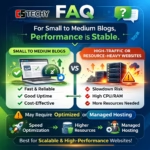
For small to medium blogs, performance is stable. However, high-traffic or resource-heavy websites may require optimized or managed hosting solutions.
GoDaddy vs Indian hosting providers – which is better?

GoDaddy offers strong brand reliability, but some Indian providers may offer better localized pricing and bundled security. Comparing plans side-by-side is recommended before deciding.
5️⃣ Should I choose GoDaddy for ecommerce?

It works for small online stores, but growing ecommerce businesses should carefully evaluate scalability, renewal costs, and performance optimization options before committing.