Shared vs VPS vs Cloud Hosting: Best Choice in 2025 | CSTechy
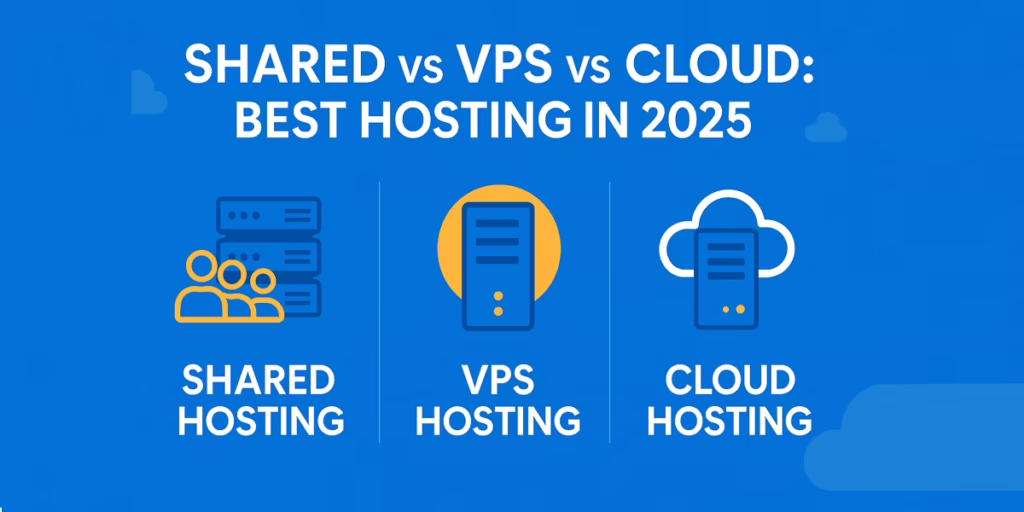
Shared Hosting vs VPS Hosting vs Cloud Hosting — which one is actually best in 2025?
In this CSTechy power guide, we break down all three hosting types in a simple, visual, and beginner-friendly way — covering real-world use cases, performance impact, pricing insights, and expert recommendations.
Choosing between Shared vs VPS vs Cloud hosting in 2025 is one of the most important decisions for website owners. Your hosting choice directly affects speed, uptime, security, SEO rankings, and scalability.
What Is Shared Hosting in 2025?
Shared hosting remains the most popular option for beginners in 2025 because it is affordable, easy to use, and requires zero technical knowledge.
Your website shares one physical server with hundreds (sometimes thousands) of other websites, all using the same CPU, RAM, and storage resources.
✅ Pros of Shared Hosting
- Very low cost (₹99 – ₹299/month)
- Beginner-friendly dashboards
- One-click WordPress & SSL installation
- No server management required
⚠️ Cons of Shared Hosting
- Slow speed during traffic spikes
- Security risks from neighboring websites
- Limited scalability
- Poor Core Web Vitals for SEO
👉 CSTechy Verdict: Shared hosting is perfect only until your site starts getting traffic. Growth = upgrade.
What Is VPS Hosting in 2025?
VPS hosting (Virtual Private Server) sits between shared and cloud hosting. You still share a physical server, but your website gets dedicated resources.
Think of VPS like living in an apartment instead of a shared hostel — more control, privacy, and stability.
✅ Why Choose VPS Hosting?
- Guaranteed CPU & RAM resources
- Better speed than shared hosting
- Improved security isolation
- Scales as your site grows
⚠️ VPS Hosting Limitations
- Costs more than shared hosting
- May require technical knowledge
- Managed VPS costs extra
👉 CSTechy Tip: If you don’t want server headaches, choose managed VPS.
What Is Cloud Hosting in 2025?
Cloud hosting is the most advanced and reliable hosting solution in 2025. Instead of relying on one server, your website runs on a network of interconnected servers.
If one server fails, another instantly takes over — delivering near-zero downtime.
✅ Cloud Hosting Benefits
If you’re planning to scale traffic or need isolated resources, it’s important to understand how modern cloud environments work. Our Hostinger Business vs Cloud Hosting guide explains why cloud infrastructure performs better than traditional shared setups.
- Highest uptime & reliability
- Instant scaling during traffic spikes
- Excellent Core Web Vitals
- Pay-as-you-use pricing model
⚠️ Cloud Hosting Drawbacks
- Costs can rise if not monitored
- Some platforms are not beginner-friendly
- Requires optimization knowledge
👉 CSTechy Pick: Managed cloud platforms give the best balance of power & simplicity.
Shared vs VPS vs Cloud: Which Hosting Type Is Best in 2025?
When comparing Shared vs VPS vs Cloud hosting in 2025, the real difference comes down to performance, scalability, and long-term growth.
For beginners, it’s mostly a budget decision. For businesses and ecommerce sites, choosing the wrong hosting can result in slow speed, poor SEO, and revenue loss.
Hosting Choice Impact on SEO, Speed & Revenue (2025)
In 2025, your hosting choice plays a direct role in SEO rankings, user trust, and business revenue. Google now heavily prioritizes Core Web Vitals, uptime consistency, and real-user performance signals.
Websites running on slow or overloaded servers often suffer from high TTFB, poor LCP scores, delayed checkout pages, and sudden downtime. This leads to higher bounce rates, lower search visibility, and lost sales — even if your content is excellent.
- Shared hosting → Fine for learning, risky for SEO growth
- VPS hosting → Balanced performance, control, and stability
- Cloud hosting → Best speed, uptime, and scalability
Final CSTechy Recommendation
There is no one-size-fits-all hosting solution. The best hosting in 2025 depends on your website goals, traffic level, and growth plan.
- Start small, but plan upgrades
- Prioritize speed and uptime
- Choose support quality over cheap pricing
🚀 Choose smart. Host faster. Rank higher.
FAQs: Shared vs VPS vs Cloud Hosting (2025)
Which is better in 2025: Shared vs VPS vs Cloud hosting?

There is no single best option. Shared hosting is ideal for beginners, VPS hosting is best for growing websites, and Cloud hosting is perfect for high-traffic or business-critical sites.
Is shared hosting good enough for SEO in 2025?

Shared hosting can work for new or low-traffic websites, but it often struggles with speed and Core Web Vitals, which can limit SEO growth as traffic increases.
When should I upgrade from shared hosting to VPS or cloud?

You should upgrade when your site experiences slow loading, frequent downtime, traffic growth, or poor Core Web Vitals scores.
Does cloud hosting really improve website speed and uptime?

Yes. Cloud hosting uses multiple servers, which improves uptime, handles traffic spikes better, and delivers faster loading speeds compared to shared or basic VPS hosting.
Which hosting type does CSTechy recommend for long-term growth?
For long-term growth, CSTechy recommends VPS hosting for medium-sized sites and managed cloud hosting for ecommerce, agencies, and high-traffic websites.