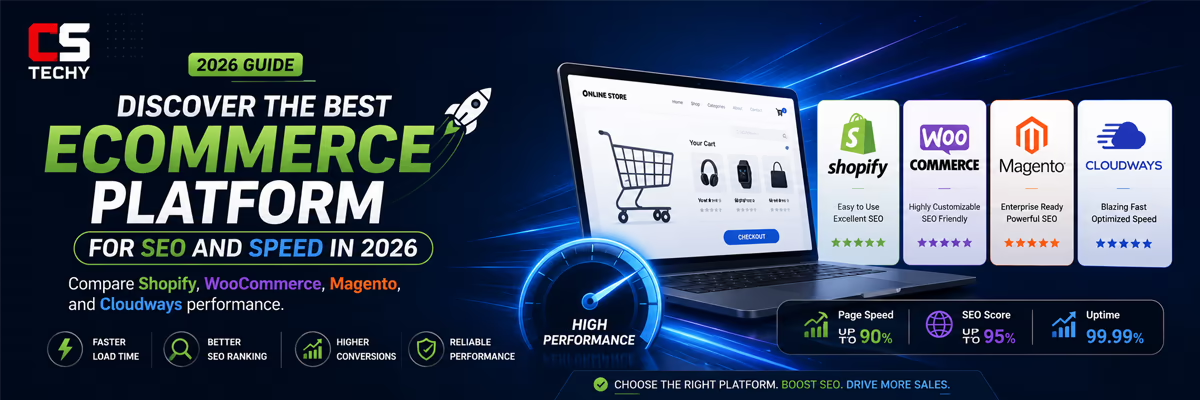
Best Ecommerce Platform for SEO and Speed in 2026
Choosing the best ecommerce platform in 2026 is no longer only about design or pricing. Modern ecommerce success now depends heavily on speed, technical SEO, Core Web Vitals, and mobile performance.
Search engines have become smarter than ever. Platforms with clean architecture, faster rendering, and strong technical optimisation now dominate rankings across competitive ecommerce keywords.
The right ecommerce platform can help your store load instantly, rank higher on Google, improve user trust, and increase conversions without depending entirely on paid advertising.
Why Speed and SEO Are the Backbone of Ecommerce Growth
Customers in 2026 expect websites to load almost instantly. Even a small delay can make users abandon carts and move to competitors within seconds.
Search engines now prioritise websites with excellent Core Web Vitals, responsive layouts, clean code structure, and stable user experiences.
| Ranking Factor | Why It Matters |
|---|---|
| Fast Loading Speed | Improves conversions and lowers bounce rates |
| Mobile Optimisation | Supports mobile-first indexing |
| Technical SEO | Helps search engines crawl products faster |
| Clean URL Structure | Improves indexing and readability |
| Structured Data | Boosts visibility with rich snippets |
Shopify Remains the Fastest All-Round Ecommerce Platform
Shopify continues dominating the ecommerce market because of its balance between simplicity, scalability, and performance. It allows businesses to launch stores quickly without managing complicated server infrastructure.
Most modern Shopify themes are already optimised for fast mobile performance and cleaner Core Web Vitals scores. The platform also benefits from global CDN delivery, lightweight rendering, and powerful SEO-focused app integrations.
| Shopify Performance Feature | SEO and Speed Benefit |
|---|---|
| Fast Cloud Infrastructure | Improves global loading speed |
| Built-In Caching Systems | Reduces server response latency |
| Mobile Optimisation | Supports mobile-first indexing |
| Easy Product Management | Simplifies ecommerce scaling |
| Scalable Checkout Systems | Improves conversion stability |
Shopify works especially well for businesses that want fast deployment with minimal technical management.
WooCommerce Gives Maximum SEO Control for Content-Driven Stores
WooCommerce remains one of the strongest ecommerce solutions for advanced SEO strategies. Since it runs on WordPress, store owners gain complete control over URLs, schema markup, metadata, and content structure.
SEO professionals still prefer WooCommerce for large-scale content marketing because WordPress offers unmatched flexibility for blogging and semantic optimisation.
| WooCommerce SEO Strength | Benefit |
|---|---|
| Custom Permalinks | Better keyword targeting |
| Advanced Plugins | Improved technical optimisation |
| Full Blogging System | Higher organic traffic potential |
| Schema Flexibility | Enhanced product visibility |
However, WooCommerce performance depends heavily on hosting quality and server optimisation. Poor hosting can negatively affect loading speed and technical SEO health.
BigCommerce Is Growing Fast for Enterprise SEO Performance
BigCommerce has become a serious competitor for growing brands that need enterprise-level ecommerce without excessive technical complexity.
The platform includes many built-in SEO features that reduce dependency on third-party plugins. Businesses also benefit from strong scalability and multi-store functionality.
| BigCommerce SEO Capability | Business Advantage |
|---|---|
| Built-In Schema Support | Enhances rich result visibility |
| SEO-Friendly Category Management | Improves crawl structure |
| Strong Cloud Infrastructure | Delivers stable high-speed performance |
| Advanced Product Filtering | Creates smoother product discovery |
| Large Catalogue Optimisation | Supports scalable ecommerce growth |
BigCommerce performs particularly well for stores managing thousands of products across multiple markets.
Magento Still Leads Enterprise Ecommerce Flexibility
Magento remains one of the most powerful ecommerce platforms for enterprise brands requiring complete customisation and scalability.
Large businesses choose Magento because it supports advanced technical SEO structures, multilingual systems, and complex product management environments.
While Magento offers exceptional flexibility, it also requires experienced developers and stronger server infrastructure to maintain high speed performance.
| Magento Advantage | Enterprise Benefit |
|---|---|
| Advanced SEO Control | Custom enterprise optimisation |
| Scalability | Handles massive product catalogues |
| Custom Architecture | Supports unique ecommerce systems |
| International Selling | Multi-region ecommerce support |
Core Web Vitals Are Now Essential for Ecommerce SEO
Google now evaluates ecommerce stores heavily through real-world performance metrics. Faster websites consistently perform better in both rankings and user engagement.
High-performing ecommerce websites in 2026 focus heavily on Core Web Vitals, rendering stability, and mobile-first optimisation to achieve stronger rankings and better conversions.
| Optimization Priority | SEO and UX Benefit |
|---|---|
| Reduce Largest Contentful Paint | Improves visible loading speed |
| Improve Interaction to Next Paint | Enhances user responsiveness |
| Prevent Layout Shifts | Creates stable browsing experience |
| Optimise Mobile Responsiveness | Supports mobile-first indexing |
| Use Lightweight Themes | Reduces frontend bloat |
| Compress Product Images | Lowers page size and latency |
Technical SEO and website speed are no longer optional upgrades. They are now foundational requirements for ecommerce visibility in modern search engines.
Final Verdict on the Best Ecommerce Platform for 2026
The best ecommerce platform for SEO and speed in 2026 depends on your business goals and technical expertise.
Shopify remains the best all-round solution for simplicity and speed. WooCommerce dominates advanced SEO flexibility. BigCommerce excels for scaling brands, while Magento continues leading enterprise customisation.
Businesses focusing on technical SEO, faster hosting infrastructure, mobile optimisation, and user experience will continue dominating ecommerce search rankings in 2026 and beyond.
Why Speed and Technical SEO Define Ecommerce Success
Ecommerce success in 2026 depends heavily on two major factors: website speed and technical SEO. Even the best products can struggle to rank when a website feels slow or difficult to navigate.
Modern users expect instant loading pages, smooth mobile browsing, and fast checkout experiences. Search engines now analyse these real user signals before deciding which ecommerce stores deserve top rankings.
A slow website creates frustration within seconds. Visitors often leave before products even appear, increasing bounce rates and reducing conversions dramatically.
Fast Websites Create Better User Experiences
Speed affects every part of the customer journey. From homepage loading to checkout completion, faster websites always create stronger engagement and trust.
| Speed Improvement | Business Benefit |
|---|---|
| Faster Page Loading | Lower bounce rates |
| Optimised Mobile Speed | Better mobile conversions |
| Quick Checkout Process | Reduced abandoned carts |
| Instant Product Rendering | Higher customer satisfaction |
Ecommerce stores with strong performance often keep visitors browsing longer. This increases product discovery and improves overall sales opportunities.
Technical SEO Helps Search Engines Understand Your Store
Technical SEO works behind the scenes to help search engines crawl, index, and rank ecommerce pages properly. Without strong technical foundations, even high-quality products may remain invisible in search results.
- Clean URL structures improve indexing
- Structured data increases rich snippets
- Mobile responsiveness supports rankings
- XML sitemaps improve crawling efficiency
- Internal linking strengthens category authority
Search engines now prioritise websites with clear architecture and stable performance. Technical SEO ensures your ecommerce store communicates properly with modern search algorithms.
Core Web Vitals Influence Modern Ecommerce Rankings
Google now evaluates real-world user experience through Core Web Vitals. These performance metrics directly influence visibility across competitive ecommerce searches.
| Core Web Vital | Purpose |
|---|---|
| Largest Contentful Paint | Measures loading speed |
| Interaction to Next Paint | Measures responsiveness |
| Cumulative Layout Shift | Measures visual stability |
Ecommerce platforms that optimise these metrics consistently perform better in organic search rankings. Faster experiences also improve customer confidence during browsing and checkout.
Mobile Optimisation Is No Longer Optional
Most ecommerce traffic now comes from mobile devices. Search engines primarily analyse mobile versions of websites before ranking pages in search results.
Mobile-friendly ecommerce stores must provide:
- Responsive layouts
- Fast-loading images
- Touch-friendly navigation
- Simple checkout forms
- Optimised product galleries
A poor mobile experience can quickly reduce rankings and destroy customer trust. Businesses that optimise for mobile users gain stronger visibility and better long-term growth.
Technical Performance Improves Ecommerce Revenue
Speed and SEO are not only technical improvements. They directly affect customer behaviour, product visibility, and overall ecommerce profitability.
Faster ecommerce websites often experience:
- Higher organic traffic
- Improved conversion rates
- Lower advertising costs
- Better user retention
- Increased repeat purchases
Businesses investing in technical SEO and high-speed infrastructure build stronger ecommerce foundations for long-term success in 2026 and beyond.
Which Ecommerce Platform Is Best for SEO in 2026?
Choosing the best ecommerce platform for SEO in 2026 is one of the biggest decisions for online businesses. Search engines now prioritise speed, mobile optimisation, clean architecture, and user experience more than ever before.
A powerful ecommerce platform helps products rank faster, improves Core Web Vitals, and creates smoother shopping experiences. The wrong platform can slow growth, reduce visibility, and increase technical SEO problems.
Modern ecommerce SEO is no longer only about keywords. Google now evaluates loading speed, structured data, responsiveness, site stability, and overall technical quality before ranking ecommerce websites.
Shopify Is the Best All-Round Ecommerce Platform
Shopify remains the strongest overall ecommerce platform for most businesses in 2026. It combines fast infrastructure, excellent scalability, strong security, and beginner-friendly management tools.
Many industry comparisons still recommend Shopify because of its performance, reliability, and large ecosystem of ecommerce applications.
| Shopify SEO Strength | Benefit |
|---|---|
| Fast CDN Infrastructure | Improves global loading speed |
| Mobile Optimisation | Supports mobile-first indexing |
| Reliable Hosting | Improves uptime stability |
| Built-In Security | Protects ecommerce transactions |
| Easy Store Management | Reduces technical complexity |
Shopify works especially well for startups, D2C brands, affiliate stores, and businesses that want strong SEO performance without server management headaches.
WooCommerce Dominates Advanced SEO Flexibility
WooCommerce continues leading advanced ecommerce SEO because it runs on WordPress. This gives businesses full control over content strategy, metadata, URLs, schema markup, and technical customisation.
SEO-focused businesses often prefer WooCommerce because WordPress remains the strongest content management system for long-form SEO content and semantic optimisation.
- Complete control over SEO plugins
- Advanced permalink customisation
- Powerful blogging integration
- Flexible schema optimisation
- Excellent internal linking structure
However, WooCommerce requires quality hosting and proper optimisation. Poor hosting environments can negatively affect speed and technical SEO performance.
BigCommerce Is Excellent for Scaling Ecommerce Brands
BigCommerce has become one of the fastest-growing ecommerce platforms for scaling brands and enterprise businesses. It provides strong built-in SEO tools without relying heavily on external plugins.
Businesses managing larger catalogues often prefer BigCommerce because of its scalability, built-in functionality, and multi-store capabilities.
| BigCommerce Feature | SEO Advantage |
|---|---|
| Built-In SEO Tools | Reduces plugin dependency |
| Multi-Store Management | Supports international SEO |
| Cloud Infrastructure | Improves scalability |
| Large Product Handling | Better enterprise performance |
BigCommerce performs especially well for medium to large ecommerce businesses expecting rapid growth.
Magento Remains the Enterprise SEO Giant
Magento, now Adobe Commerce, still leads enterprise ecommerce customisation. Large organisations use Magento because of its flexibility, advanced integrations, and enterprise-level architecture.
Magento delivers advanced ecommerce flexibility and deep SEO control for enterprise-level businesses. However, the platform usually requires experienced developers, stronger optimisation strategies, and high-performance hosting infrastructure.
| Magento Enterprise Feature | Ecommerce SEO Advantage |
|---|---|
| Advanced SEO Customisation | Supports complex optimisation strategies |
| Complex Catalogue Management | Handles massive product inventories |
| Enterprise Scalability | Supports long-term ecommerce growth |
| Multi-Language Ecommerce Support | Improves international SEO targeting |
| Large Database Optimisation | Enhances enterprise performance stability |
Magento works best for enterprise companies managing massive product catalogues and custom ecommerce systems.
Core Web Vitals Now Influence Ecommerce Rankings Heavily
Core Web Vitals have become a major ranking factor for ecommerce SEO in 2026. Faster platforms consistently outperform slower competitors in both rankings and conversions.
| Core Web Vital | Purpose |
|---|---|
| Largest Contentful Paint | Measures page loading speed |
| Interaction to Next Paint | Measures responsiveness |
| Cumulative Layout Shift | Measures visual stability |
Platforms with lightweight architecture, optimised themes, and faster cloud infrastructure now dominate modern ecommerce rankings.
Final Verdict for Ecommerce SEO in 2026
Shopify remains the best overall ecommerce platform for speed, simplicity, and scalability. WooCommerce offers the strongest SEO flexibility for content-heavy businesses.
BigCommerce performs exceptionally well for scaling ecommerce brands, while Magento continues dominating enterprise customisation and advanced ecommerce architecture.
Businesses that focus on technical SEO, Core Web Vitals, mobile optimisation, and high-speed infrastructure will achieve stronger rankings, better user engagement, and higher ecommerce revenue in 2026.
Shopify SEO Performance and App Bloat Risks
Shopify is widely recognised as one of the fastest ecommerce platforms for beginners and growing online brands. Its cloud infrastructure, CDN delivery, and mobile-friendly architecture help stores achieve strong loading speeds quickly.
Many ecommerce businesses choose Shopify because it removes complex server management and technical maintenance. This allows store owners to focus more on products, branding, and customer experience.
Shopify themes are usually well-optimised for mobile responsiveness and Core Web Vitals. Faster rendering and stable layouts help improve user engagement and search visibility.
| Shopify SEO Advantage | Impact on Ecommerce Growth |
|---|---|
| Fast Cloud Hosting | Improves website speed globally |
| Mobile Optimisation | Supports mobile-first indexing |
| Automatic CDN Delivery | Reduces loading delays |
| Built-In SSL Security | Improves trust and SEO signals |
| Clean Checkout Experience | Boosts conversions |
However, many Shopify stores slowly develop performance problems because of excessive app installations. This issue is commonly known as app bloat.
Every additional app can inject scripts, tracking systems, CSS files, and JavaScript into the storefront. Over time, this increases page weight and slows overall website performance.
Some store owners install too many apps for popups, reviews, upsells, analytics, sliders, and automation tools. While these features may appear useful, they can quietly damage technical SEO performance.
- Slower page loading times
- Higher JavaScript execution delays
- Poor Core Web Vitals scores
- Increased layout shifts
- Lower mobile responsiveness
Google now heavily evaluates real-world user experience metrics. Stores overloaded with unnecessary apps often struggle to maintain strong rankings in competitive ecommerce searches.
App bloat also affects customer trust indirectly. Slow-loading product pages can create frustration during browsing and increase abandoned carts significantly.
| App Bloat Problem | SEO Risk |
|---|---|
| Heavy JavaScript | Slower interaction speed |
| Multiple Tracking Scripts | Reduced page responsiveness |
| Unused App Code | Higher page weight |
| Too Many Popup Tools | Poor mobile usability |
| Excessive Animation Effects | Core Web Vitals instability |
The best-performing Shopify stores usually follow a lightweight optimisation strategy. They install only essential apps and regularly audit unused scripts and integrations.
Ecommerce businesses should prioritise:
- Lightweight ecommerce themes for faster rendering
- Minimal app installations to reduce JavaScript bloat
- Compressed product images for lower page size
- Optimised JavaScript loading for smoother user experience
- Regular performance testing and Core Web Vitals audits
Shopify remains one of the best ecommerce platforms for SEO and speed in 2026. But long-term success depends heavily on maintaining a clean, lightweight, and technically optimised storefront.
WooCommerce and Cloudways for Full SEO Control
WooCommerce remains one of the most powerful ecommerce solutions for businesses that want complete SEO flexibility in 2026. Unlike many closed ecommerce platforms, WooCommerce gives store owners deeper control over technical optimisation and content structure.
When combined with high-performance cloud hosting, WooCommerce can deliver exceptional speed, stronger indexing, and advanced ecommerce SEO performance. This combination is especially valuable for businesses focused on long-term organic traffic growth.
Many SEO professionals still prefer WooCommerce because it runs on WordPress. This creates a perfect environment for advanced blogging, semantic SEO, internal linking, and structured content strategies.
| WooCommerce SEO Feature | Benefit for Ecommerce Growth |
|---|---|
| Custom URL Structure | Improves keyword targeting |
| Advanced Schema Support | Boosts product visibility |
| SEO Plugin Flexibility | Enhances optimisation control |
| Content Marketing Integration | Improves organic traffic growth |
| Custom Technical Optimisation | Supports advanced SEO strategies |
Hosting quality plays a major role in WooCommerce performance. Poor hosting environments can slow product pages, increase server response times, and negatively affect Core Web Vitals.
This is why many ecommerce businesses choose cloud hosting environments designed specifically for WordPress and WooCommerce optimisation. Faster infrastructure creates smoother browsing experiences and better ranking potential.
WooCommerce also performs exceptionally well for content-heavy ecommerce stores. Businesses can easily publish buying guides, comparison articles, tutorials, and SEO landing pages directly inside the same platform.
- Better control over technical SEO and indexing structure
- Improved internal linking opportunities for stronger authority flow
- Stronger semantic content structure for modern search engines
- Advanced product page optimisation for higher conversion visibility
- Flexible category architecture for scalable ecommerce growth
Unlike simpler ecommerce builders, WooCommerce allows deeper optimisation of metadata, canonical tags, redirects, and structured data. This gives businesses greater long-term SEO scalability.
| SEO Area | WooCommerce Advantage |
|---|---|
| Blog SEO | Full WordPress publishing power |
| Technical Optimisation | Advanced customisation flexibility |
| Core Web Vitals | Optimised hosting compatibility |
| Structured Data | Enhanced rich snippet support |
| Content Authority | Stronger topical relevance |
Businesses aiming for aggressive SEO growth often prefer WooCommerce because they can fully customise both ecommerce and content strategies together. This creates stronger topical authority across competitive search categories.
WooCommerce and high-speed cloud hosting continue to be one of the strongest combinations for businesses seeking full SEO control, faster performance, and scalable ecommerce growth in 2026.
Magento SEO Features vs Performance Costs
Magento remains one of the most advanced ecommerce platforms for enterprise-level SEO and large online stores. It offers deep customisation, flexible architecture, and powerful optimisation capabilities for complex ecommerce businesses.
Large brands often choose Magento because it supports advanced product management, multilingual websites, and highly customised ecommerce experiences. This flexibility makes Magento extremely powerful for businesses targeting aggressive SEO growth.
Magento gives ecommerce teams stronger control over technical SEO structures compared to many simplified ecommerce platforms. Businesses can customise almost every area of optimisation and website architecture.
| Magento SEO Feature | Benefit for Ecommerce Stores |
|---|---|
| Advanced URL Management | Improves keyword targeting |
| Custom Metadata Control | Enhances search visibility |
| Structured Data Flexibility | Supports rich snippets |
| Multi-Store SEO Support | Improves international targeting |
| Large Catalogue Optimisation | Handles enterprise product scaling |
Magento performs especially well for businesses managing thousands of products across multiple categories and regions. Its architecture supports advanced ecommerce operations that smaller platforms may struggle to handle efficiently.
However, Magento’s power also creates higher performance demands. The platform requires stronger hosting infrastructure, server optimisation, and experienced technical management to maintain fast speeds.
Without proper optimisation, Magento websites can become heavy and resource-intensive. Slow page loading can negatively affect Core Web Vitals, mobile usability, and overall SEO performance.
- Higher server resource requirements for stable performance
- More complex technical maintenance compared to simpler platforms
- Larger database processing loads for enterprise catalogues
- Increased caching requirements to maintain faster rendering
- Greater development dependency for advanced customisation
Many businesses underestimate the infrastructure needed to run Magento efficiently. Weak hosting environments often create slower product rendering and unstable browsing experiences.
| Performance Challenge | SEO Impact |
|---|---|
| Heavy Page Rendering | Slower loading speed |
| Large Database Queries | Reduced responsiveness |
| Unoptimised Extensions | Poor Core Web Vitals |
| Weak Hosting Infrastructure | Lower search visibility |
| Complex Backend Processing | Longer server response times |
Businesses using Magento usually need advanced caching systems, CDN integration, image optimisation, and high-performance cloud hosting to achieve competitive speeds.
Magento works best for enterprise ecommerce brands with dedicated technical teams and long-term scaling plans. Smaller businesses may find simpler ecommerce platforms easier to manage and optimise.
Despite the higher performance costs, Magento continues to deliver exceptional SEO flexibility and enterprise ecommerce power for brands requiring complete customisation in 2026.
Shopify vs WooCommerce vs Magento SEO Comparison
Choosing the right ecommerce platform in 2026 can directly affect your rankings, loading speed, customer experience, and long-term business growth. Shopify, WooCommerce, and Magento each offer powerful ecommerce capabilities, but their SEO performance differs significantly.
Modern ecommerce SEO now depends heavily on technical optimisation, rendering speed, crawl efficiency, structured data support, and clean HTML architecture. Search engines reward platforms that provide fast, lightweight, and stable browsing experiences.
Businesses must also consider plugin dependency, scalability, and maintenance complexity before choosing an ecommerce platform. A technically overloaded website can reduce both rankings and conversions over time.
| SEO Factor | Shopify | WooCommerce | Magento |
|---|---|---|---|
| Rendering Speed | Very Fast | Depends on Hosting | Heavy Without Optimisation |
| HTML Cleanliness | Clean Structure | Highly Flexible | Complex Architecture |
| Schema Support | Good Built-In Support | Advanced Plugin Support | Enterprise-Level Flexibility |
| Crawl Efficiency | Strong | Excellent with Optimisation | Requires Technical Tuning |
| Plugin Dependency | Moderate | High | Extension Heavy |
| SEO Flexibility | Moderate | Excellent | Very Advanced |
Shopify Delivers Strong Speed and Simplicity
Shopify remains one of the easiest ecommerce platforms for businesses that want fast performance with minimal technical management. Its cloud-based infrastructure delivers stable loading speeds and reliable uptime globally.
Most Shopify stores benefit from lightweight rendering and strong mobile optimisation out of the box. This helps improve Core Web Vitals and supports better ecommerce rankings.
However, heavy app usage can slowly create performance issues. Too many scripts, tracking tools, and popup integrations may reduce rendering speed and affect crawl efficiency.
- Fast global CDN delivery for lower loading latency
- Clean mobile responsiveness for smoother user experience
- Reliable hosted infrastructure with stable uptime performance
- Easy beginner management without complex server handling
- Moderate SEO customisation for growing ecommerce stores
WooCommerce Provides Full SEO Flexibility
WooCommerce continues dominating advanced ecommerce SEO because of its WordPress foundation. Businesses gain deeper control over URLs, metadata, schema markup, content structure, and technical optimisation.
WooCommerce performs exceptionally well for content-heavy ecommerce websites using buying guides, blog content, and semantic SEO strategies. This creates stronger topical authority across competitive search categories.
Performance quality depends heavily on hosting infrastructure and optimisation practices. Lightweight themes and high-speed hosting environments are critical for maintaining fast loading times.
- Advanced SEO plugin ecosystem for deeper optimisation control
- Flexible internal linking structures for stronger authority flow
- Excellent content marketing support for organic traffic growth
- Strong schema optimisation potential for rich search visibility
- High customisation flexibility for scalable ecommerce architecture
Magento Excels for Enterprise Ecommerce SEO
Magento remains one of the most powerful enterprise ecommerce platforms for businesses managing large-scale online operations. Its advanced architecture supports massive catalogues, multilingual stores, and custom ecommerce ecosystems.
Magento offers deep technical SEO flexibility and enterprise-level optimisation control. Large businesses often prefer Magento because of its scalability and advanced ecommerce management capabilities.
However, Magento requires powerful hosting infrastructure and technical expertise to maintain strong performance. Without optimisation, rendering speed and crawl efficiency can become major challenges.
| Magento Strength | Enterprise Benefit |
|---|---|
| Advanced SEO Architecture | Supports complex optimisation |
| Large Catalogue Handling | Improves enterprise scalability |
| Custom Schema Flexibility | Enhances search visibility |
| Multi-Store Support | Strengthens international SEO |
Rendering Speed and Crawl Efficiency Now Matter More Than Ever
Google now evaluates ecommerce websites heavily through real-world user experience metrics. Faster rendering and cleaner HTML structures help search engines crawl ecommerce stores more efficiently.
Ecommerce businesses using lightweight themes, optimised scripts, compressed images, and efficient hosting environments consistently achieve better rankings and stronger customer engagement.
The best ecommerce platform for SEO in 2026 ultimately depends on your business goals, technical expertise, and scalability requirements. Shopify leads in simplicity and speed, WooCommerce dominates SEO flexibility, and Magento continues powering enterprise ecommerce growth.
Best SEO Tools for Ecommerce Optimization
Ecommerce SEO in 2026 requires more than basic keyword optimisation. Modern online stores now depend on technical analysis, speed optimisation, structured data, and advanced content strategies to stay competitive.
The right SEO tools help ecommerce businesses improve rankings, analyse competitors, optimise Core Web Vitals, and increase organic traffic more efficiently. These tools also simplify technical SEO management for growing ecommerce websites.
Businesses that combine strong ecommerce platforms with professional SEO tools often achieve faster growth and better search visibility across competitive product categories.
| SEO Tool | Main Ecommerce Benefit |
|---|---|
| Rank Math | Advanced on-page SEO optimisation |
| Semrush | Keyword research and competitor analysis |
| Screaming Frog | Technical SEO auditing |
| Cloudflare | Global speed and security optimisation |
| LiteSpeed Cache | Server-level caching performance |
Rank Math Helps Optimise Ecommerce SEO Structure
Rank Math has become one of the most popular SEO plugins for WordPress and WooCommerce ecommerce stores. It provides powerful optimisation tools while remaining lightweight and beginner-friendly.
Ecommerce businesses use Rank Math to improve metadata, schema markup, XML sitemaps, redirects, and product SEO structure. Its automation features also help simplify large ecommerce optimisation tasks.
- Product schema optimisation for enhanced rich result visibility
- Advanced metadata management for stronger keyword targeting
- SEO scoring analysis to improve on-page optimisation quality
- Internal linking suggestions for better crawl structure
- Rich snippet support for higher click-through opportunities
Rank Math works especially well for WooCommerce websites focused on aggressive organic traffic growth and content marketing strategies.
Semrush Improves Keyword Research and Competitor Analysis
Semrush remains one of the strongest SEO platforms for ecommerce research and competitive analysis. It helps businesses identify valuable keywords, monitor rankings, and discover new traffic opportunities.
Ecommerce brands use Semrush to analyse competitor product pages, backlink profiles, and trending commercial search queries. This creates stronger content and optimisation strategies.
| Semrush Feature | SEO Advantage |
|---|---|
| Keyword Gap Analysis | Finds ranking opportunities |
| Traffic Analytics | Tracks competitor performance |
| Backlink Monitoring | Improves authority building |
| Site Audits | Identifies technical SEO issues |
Semrush is particularly valuable for ecommerce businesses targeting high-volume commercial keywords and large product categories.
Screaming Frog Strengthens Technical Ecommerce SEO
Screaming Frog is one of the most powerful technical SEO auditing tools available for ecommerce websites. It helps businesses detect hidden issues that affect crawl efficiency and indexing performance.
Large ecommerce stores often contain thousands of pages, making manual audits nearly impossible. Screaming Frog simplifies this process by crawling websites like a search engine bot.
- Detects broken links
- Finds duplicate metadata
- Analyses redirect chains
- Checks indexing issues
- Improves crawl efficiency
Technical SEO audits are essential for maintaining healthy ecommerce architecture and long-term ranking stability.
Cloudflare Improves Global Ecommerce Speed and Security
Cloudflare has become one of the most important performance tools for ecommerce optimisation in 2026. It improves website speed, enhances security, and reduces server load globally.
Ecommerce websites benefit heavily from Cloudflare’s CDN infrastructure and caching systems. Faster delivery speeds help improve Core Web Vitals and customer experience.
- Global CDN acceleration for faster worldwide content delivery
- Advanced DDoS protection for stronger ecommerce security
- Image optimisation to reduce page size and loading delays
- Intelligent bot protection for cleaner traffic management
- Reduced server response times for improved Core Web Vitals
Cloudflare also strengthens website reliability during high traffic periods and promotional ecommerce campaigns.
LiteSpeed Cache Enhances WooCommerce Performance
LiteSpeed Cache is one of the fastest caching solutions for WordPress and WooCommerce websites. It improves loading speed significantly by optimising server-level caching and frontend performance.
Faster ecommerce websites provide smoother browsing experiences and better search engine visibility. LiteSpeed Cache also helps reduce server resource usage during traffic spikes.
| LiteSpeed Feature | Performance Benefit |
|---|---|
| Page Caching | Faster page rendering |
| Image Compression | Reduced page weight |
| CSS and JS Optimisation | Improved Core Web Vitals |
| Server-Level Optimisation | Higher traffic stability |
Ecommerce businesses focused on technical SEO and speed optimisation often use LiteSpeed Cache alongside high-performance hosting environments for maximum results.
SEO Tools Create Stronger Ecommerce Foundations
The best ecommerce SEO strategies combine technical optimisation, keyword research, content marketing, and performance improvements together. Professional SEO tools help businesses manage these areas more efficiently.
Rank Math, Semrush, Screaming Frog, Cloudflare, and LiteSpeed Cache remain some of the strongest ecommerce optimisation tools available in 2026. Businesses using these tools effectively can build faster, more visible, and more profitable ecommerce websites.
Ecommerce Site Search Best Practices for SEO
Ecommerce site search has become one of the most important hidden SEO factors in 2026. A poorly optimised search system can waste crawl budget, create duplicate pages, and weaken overall ecommerce visibility.
Modern search engines now analyse internal search quality, navigation structure, and user interaction signals more deeply than ever before. Strong ecommerce search architecture improves both SEO performance and customer experience simultaneously.
Businesses with clean search structures often achieve better crawl efficiency, stronger indexing, and improved user engagement across large ecommerce catalogues.
Crawl Budget Management Is Critical for Large Ecommerce Stores
Search engines allocate limited crawl resources to every website. Large ecommerce stores with thousands of URLs must manage crawl budget carefully to ensure important pages receive priority indexing.
Poor internal search systems can generate endless low-value URLs that consume crawler resources unnecessarily. This may prevent important product and category pages from being crawled efficiently.
| Crawl Budget Problem | SEO Impact |
|---|---|
| Duplicate Search URLs | Reduced crawl efficiency |
| Infinite Filter Combinations | Index bloat issues |
| Low-Value Search Pages | Weaker ranking signals |
| Uncontrolled Parameters | Wasted crawler resources |
Ecommerce businesses should focus crawler attention on high-value pages such as products, categories, buying guides, and transactional landing pages.
Faceted Navigation Can Create Serious SEO Problems
Faceted navigation helps users filter products by size, colour, brand, price, and other attributes. While useful for user experience, it can also create massive SEO complications if not managed correctly.
Every filter combination may generate a new crawlable URL. Large ecommerce stores can accidentally create millions of low-value pages without proper optimisation.
- Duplicate content generation
- Index bloat expansion
- Crawl budget waste
- Thin content issues
- Reduced category authority
Businesses should carefully control which filtered pages are indexable. Only high-value filtered combinations with real search demand should be allowed into search engine indexes.
Internal Search Indexing Requires Careful Control
Internal search result pages often provide weak SEO value because they create thin or repetitive content. Search engines generally discourage indexing low-quality internal search URLs.
Ecommerce stores should review whether internal search pages genuinely provide unique value before allowing them into search indexes.
| Search Page Type | Recommended SEO Action |
|---|---|
| Generic Search Queries | Use noindex |
| Thin Product Searches | Block indexing |
| High-Intent Search Pages | Optimise selectively |
| Seasonal Search Categories | Evaluate search demand |
Strategic indexing decisions help search engines focus on the strongest ecommerce pages instead of crawling unnecessary low-value URLs.
User Experience Metrics Now Influence Ecommerce Rankings
Search engines increasingly measure real user behaviour signals when evaluating ecommerce quality. Internal search systems play a major role in customer satisfaction and engagement metrics.
A fast and accurate internal search engine improves:
- Longer session duration for stronger engagement signals
- Faster product discovery through improved internal search experience
- Higher conversion rates from smoother navigation flow
- Better page interaction and reduced bounce behaviour
- Improved customer retention through cleaner user experience
Slow or inaccurate search experiences often increase bounce rates and reduce customer trust. This can indirectly weaken SEO performance over time.
Noindex Strategy Helps Protect Ecommerce SEO Health
A proper noindex strategy is essential for large ecommerce websites managing thousands of dynamic pages. Not every page deserves inclusion in search engine indexes.
Ecommerce businesses should carefully noindex:
- Thin internal search pages with little SEO value
- Low-value filter URLs that create unnecessary index bloat
- Duplicate faceted combinations affecting crawl efficiency
- Temporary campaign pages no longer relevant for search indexing
- Session-based parameter URLs generating duplicate content signals
This prevents index pollution and helps search engines focus on the most valuable ecommerce pages. Cleaner indexes often lead to stronger crawl efficiency and improved ranking consistency.
| Noindex Benefit | Ecommerce SEO Advantage |
|---|---|
| Reduced Index Bloat | Stronger site quality signals |
| Improved Crawl Focus | Faster indexing of priority pages |
| Cleaner Search Architecture | Better technical SEO health |
| Reduced Duplicate Content | Higher ranking stability |
Strong Search Architecture Improves AI Overview Visibility
AI-powered search systems now evaluate ecommerce structure, crawl clarity, and content organisation more deeply than traditional ranking systems. Clean search architecture helps AI engines understand ecommerce websites more efficiently.
Ecommerce stores with controlled indexing, efficient faceted navigation, and strong technical SEO structures are more likely to gain visibility in AI-generated search experiences and advanced search summaries.
Businesses that optimise crawl budget, internal search quality, UX metrics, and noindex strategies will build stronger ecommerce authority in 2026 and beyond.
One-Page vs Multi-Step Checkout: Which Converts Better?
Checkout optimisation has become one of the most important conversion factors in ecommerce growth. Even small improvements in the checkout experience can significantly increase sales and reduce cart abandonment.
In 2026, ecommerce businesses are heavily analysing whether one-page checkout or multi-step checkout delivers better conversion performance. The answer often depends on mobile UX, customer psychology, page speed, and overall checkout experience quality.
Search engines and AI-driven ecommerce systems now evaluate real-world engagement signals more deeply. Faster and smoother checkout systems not only improve conversions but also strengthen overall website quality metrics.
One-Page Checkout Creates Faster Purchase Experiences
One-page checkout places the entire purchasing process on a single screen. Customers can enter shipping details, payment information, and order confirmation without navigating between multiple pages.
This approach reduces friction and shortens the buying journey significantly. Many ecommerce brands prefer one-page checkout because it feels faster and more modern for users.
| One-Page Checkout Benefit | Conversion Advantage |
|---|---|
| Fewer Page Loads | Lower checkout latency |
| Single Screen Experience | Faster completion rates |
| Reduced Navigation Friction | Improved mobile usability |
| Quick Visual Flow | Better impulse purchasing |
One-page checkout performs especially well for mobile ecommerce users who prefer minimal interaction and faster purchasing experiences.
Multi-Step Checkout Builds Psychological Progression
Multi-step checkout separates the buying process into smaller stages such as shipping, billing, and payment confirmation. This structure can reduce cognitive overload for users during complex purchases.
Many ecommerce brands use multi-step checkout because it creates a psychological sense of progression. Customers often feel more committed after completing each stage of the process.
- Reduces form fatigue during longer checkout processes
- Improves information clarity for better user understanding
- Supports complex product orders and custom purchase flows
- Creates guided user journeys with smoother progression
- Allows step-by-step validation to reduce checkout errors
Multi-step systems can work extremely well for enterprise ecommerce, subscription services, and high-ticket purchases where users require more reassurance before payment.
Mobile UX Plays a Major Role in Checkout Conversions
Mobile ecommerce traffic now dominates most online stores globally. Checkout experiences that feel slow or confusing on smartphones often create immediate abandonment.
One-page checkouts can become overwhelming on smaller screens when too many fields appear at once. Meanwhile, poorly designed multi-step checkouts may create excessive loading delays between pages.
| Mobile UX Factor | Impact on Conversions |
|---|---|
| Fast Form Rendering | Higher checkout completion |
| Touch-Friendly Inputs | Reduced user frustration |
| Minimal Typing Requirements | Improved mobile usability |
| Clear Navigation Flow | Lower abandonment rates |
Ecommerce businesses must optimise mobile checkout interfaces carefully because even minor UX issues can dramatically reduce sales performance.
CLS and Checkout Stability Affect Customer Trust
Cumulative Layout Shift, commonly called CLS, has become an important factor in ecommerce checkout performance. Layout instability during checkout can frustrate users and reduce trust immediately.
Unexpected movement of buttons, payment forms, or shipping sections creates anxiety during transactions. Customers may fear payment errors or security problems when checkout pages behave unpredictably.
- Stable payment buttons improve customer trust during checkout
- Consistent layouts reduce confusion across mobile and desktop devices
- Fast rendering improves confidence while processing transactions
- Clean visual structure increases usability and smoother navigation
- Lower CLS strengthens Core Web Vitals and UX performance metrics
Optimising checkout stability is now essential for both conversions and Core Web Vitals performance.
Checkout Latency Strongly Influences Abandonment Metrics
Checkout latency refers to delays during page rendering, payment processing, or form interactions. Even small delays can interrupt purchasing momentum and increase abandonment rates.
Modern customers expect ecommerce checkouts to feel instant. Slow payment processing or delayed page transitions often create uncertainty and hesitation.
| Checkout Delay Problem | Business Impact |
|---|---|
| Slow Payment Loading | Higher abandonment rates |
| Delayed Form Validation | Increased frustration |
| Heavy Scripts | Reduced responsiveness |
| Multiple Redirects | Lower conversion trust |
Faster checkout environments create smoother emotional experiences for users. This improves trust and encourages customers to complete purchases confidently.
Conversion Psychology Shapes Checkout Success
Ecommerce conversions are strongly influenced by emotional and psychological triggers. Customers want simplicity, reassurance, speed, and confidence during checkout.
One-page checkout often increases impulse purchases because users see the entire process immediately. Multi-step checkout, however, can reduce anxiety for larger purchases by breaking decisions into manageable stages.
- Reduce unnecessary form fields for faster checkout completion
- Display trust signals clearly to improve customer confidence
- Minimise distractions during checkout to maintain purchase focus
- Provide fast payment feedback for smoother transaction experience
- Keep checkout visually stable to strengthen user trust and usability
The best-performing ecommerce checkouts focus on emotional comfort as much as technical speed. Customers who feel safe and confident are far more likely to complete transactions successfully.
Which Checkout Model Converts Better in 2026?
One-page checkout generally performs better for mobile-first ecommerce stores, impulse purchases, and lightweight product catalogues. Multi-step checkout often works better for complex orders, enterprise ecommerce, and higher-value transactions.
The highest-converting ecommerce stores optimise both technical performance and customer psychology together. Faster loading speeds, low CLS, strong mobile UX, and minimal checkout latency now define successful ecommerce conversions in 2026.
Best Ecommerce Shipping and Inventory Solutions
Ecommerce shipping and inventory systems now play a major role in website performance, SEO stability, and customer experience. In 2026, many ecommerce stores become slower not because of themes, but because of overloaded shipping integrations and inventory tracking systems.
Modern ecommerce platforms rely heavily on APIs, real-time inventory updates, tracking scripts, and third-party logistics tools. Without optimisation, these systems can create excessive server requests and performance bottlenecks.
Businesses that optimise shipping and inventory architecture properly often achieve faster page speeds, cleaner technical SEO signals, and better checkout performance.
API Weight Can Slow Ecommerce Performance
Many ecommerce stores now depend on multiple APIs for shipping calculations, order tracking, warehouse syncing, and inventory management. Each additional API request increases server communication and processing time.
Heavy API usage can delay product rendering, slow checkout interactions, and reduce overall site responsiveness during high traffic periods.
| API Performance Issue | Technical Impact |
|---|---|
| Multiple Carrier Requests | Higher latency |
| Real-Time Stock Validation | Slower product rendering |
| Third-Party Inventory APIs | Increased server load |
| Shipping Rate Calculations | Delayed checkout speed |
Lightweight API architecture and intelligent caching strategies help ecommerce stores maintain faster response times while supporting advanced logistics systems.
JavaScript Bloat Often Comes From Shipping Tools
Many shipping and inventory plugins inject large JavaScript files into ecommerce stores. These scripts may handle tracking systems, delivery estimators, warehouse syncing, and dynamic checkout updates.
Excessive JavaScript can negatively affect Core Web Vitals, interaction speed, and mobile responsiveness. Overloaded scripts also increase browser processing time significantly.
- Slower page interaction affecting overall browsing experience
- Reduced mobile performance across smartphones and tablets
- Higher rendering delays during product and checkout loading
- Poor Interaction to Next Paint scores reducing responsiveness
- Increased layout instability affecting Core Web Vitals quality
Ecommerce stores should regularly audit unnecessary shipping scripts and remove unused integrations to maintain cleaner frontend performance.
Tracking Scripts Can Quietly Damage Core Web Vitals
Shipment tracking systems often load multiple external resources from logistics providers and analytics platforms. These scripts may run continuously in the background while customers browse products.
Too many tracking systems can create hidden performance issues that slowly weaken ecommerce SEO signals over time.
| Tracking Script Issue | SEO Risk |
|---|---|
| Heavy External Requests | Longer loading times |
| Third-Party Script Chains | Reduced crawl efficiency |
| Real-Time Tracking Widgets | Poor mobile UX |
| Multiple Analytics Calls | Increased JS execution time |
Search engines now evaluate real-world user experience more deeply. Stores overloaded with external tracking scripts often struggle to maintain strong Core Web Vitals performance.
Real-Time Inventory Sync Latency Affects Ecommerce Stability
Real-time inventory synchronisation helps ecommerce stores prevent overselling and stock inconsistencies. However, continuous sync requests can also create backend performance pressure.
Large ecommerce stores connected to multiple warehouses or marketplaces often experience sync latency during peak traffic periods. Delayed stock updates may affect product accuracy and customer trust.
- Warehouse syncing delays affecting real-time inventory accuracy
- Marketplace inventory conflicts creating stock inconsistencies
- Slower product availability updates during high traffic periods
- Backend database pressure reducing ecommerce responsiveness
- Checkout validation delays impacting conversion performance
Businesses should optimise sync intervals carefully instead of forcing constant real-time communication for every inventory change.
Server Requests Directly Affect Ecommerce Speed
Every shipping plugin, inventory integration, and tracking tool creates additional server requests. High request volumes increase processing load and slow overall ecommerce responsiveness.
Ecommerce websites with excessive server requests often experience slower page rendering, weaker mobile performance, and unstable checkout behaviour.
| Server Request Source | Performance Impact |
|---|---|
| Carrier Rate APIs | Checkout latency |
| Inventory Validation Calls | Backend slowdown |
| Shipment Tracking Systems | Higher external requests |
| Warehouse Sync Tools | Database processing pressure |
High-performance ecommerce stores usually minimise unnecessary requests through caching, lightweight integrations, and efficient API management.
Optimised Shipping Infrastructure Improves Ecommerce SEO
Ecommerce SEO is no longer only about keywords and backlinks. Technical performance, rendering efficiency, and backend stability now influence rankings heavily.
Lightweight shipping systems, faster inventory syncing, reduced JavaScript bloat, and optimised server requests help create cleaner ecommerce architecture for both users and search engines.
Businesses that optimise shipping and inventory performance carefully will achieve stronger Core Web Vitals, better crawl efficiency, and smoother ecommerce experiences in 2026 and beyond.
Why Cloudways Improves Ecommerce SEO Performance
Ecommerce SEO performance depends heavily on hosting quality in 2026. Even the best ecommerce platform can struggle to rank when server infrastructure becomes slow, unstable, or overloaded during traffic spikes.
Modern search engines now evaluate real-world performance signals including loading speed, responsiveness, uptime stability, and mobile experience. Hosting environments directly influence all of these ranking factors.
This is why many ecommerce businesses are moving toward managed cloud hosting environments built specifically for high-performance websites and advanced SEO optimisation.
Cloud Infrastructure Helps Improve Core Web Vitals
Faster hosting environments help ecommerce stores achieve stronger Core Web Vitals scores and smoother customer experiences. Search engines consistently reward websites with fast rendering and stable performance metrics.
Cloud-based infrastructure distributes resources more efficiently compared to traditional shared hosting environments. This reduces server slowdowns during high traffic periods and promotional campaigns.
| Infrastructure Feature | SEO Performance Benefit |
|---|---|
| SSD Cloud Servers | Faster page rendering |
| Dedicated Resources | Improved stability |
| Optimised Stack | Better Core Web Vitals |
| Advanced Caching | Reduced server latency |
Ecommerce websites that maintain stable performance during peak traffic often achieve stronger rankings and lower bounce rates over time.
Redis and Object Cache Reduce Database Pressure
Ecommerce websites generate large numbers of database queries through product filtering, cart updates, search systems, and checkout operations. Without optimisation, these processes can slow websites dramatically.
Redis object caching helps reduce repeated database requests by storing frequently accessed data in memory. This improves page speed and reduces backend processing delays significantly.
- Faster WooCommerce product loading for smoother browsing experience
- Reduced database query time for improved backend performance
- Improved cart responsiveness during checkout interactions
- Lower server resource usage for higher infrastructure efficiency
- Better scalability during sudden traffic spikes and sales campaigns
Object caching becomes especially important for large ecommerce stores managing thousands of products and high daily traffic volumes.
Vultr High Frequency Servers Improve Rendering Speed
Vultr High Frequency servers are widely recommended for ecommerce performance because they provide faster CPU processing and NVMe storage technology. These improvements help websites render product pages more quickly.
Faster rendering directly improves user experience and search engine performance signals. Ecommerce stores with lower server response times often achieve better mobile usability and higher conversion rates.
| Vultr HF Advantage | Ecommerce Benefit |
|---|---|
| High Clock Speed CPUs | Faster backend processing |
| NVMe Storage | Lower data retrieval latency |
| Optimised Compute Performance | Improved checkout speed |
| Better Traffic Handling | Higher uptime stability |
High-frequency infrastructure helps ecommerce stores maintain fast performance even during seasonal sales and high-demand campaigns.
CDN Integration Improves Global Ecommerce Speed
Ecommerce customers now browse from multiple countries and devices simultaneously. Content Delivery Networks help reduce latency by serving website content from servers located closer to users.
CDN optimisation improves image delivery, script loading, and overall ecommerce responsiveness globally. Faster content delivery strengthens both user engagement and SEO performance.
- Reduced global loading times for international ecommerce visitors
- Improved mobile performance across slower network connections
- Faster image rendering for smoother product browsing experience
- Lower server bandwidth pressure during high traffic periods
- Better traffic distribution through global CDN infrastructure
Ecommerce stores using CDN acceleration often maintain stronger Core Web Vitals scores across international traffic regions.
Staging Environments Protect Ecommerce SEO Stability
Ecommerce websites constantly require updates for themes, plugins, products, and checkout systems. Directly modifying live websites can create unexpected SEO problems and technical instability.
Staging environments allow businesses to test updates safely before deploying them to production websites. This helps prevent downtime, broken layouts, and performance issues.
- Safe plugin testing before deploying changes to live ecommerce stores
- Protected theme updates without affecting customer experience
- Reduced downtime risks during maintenance and optimisation
- Improved development workflow for faster technical improvements
- Stronger technical SEO consistency across updates and deployments
Stable ecommerce architecture is essential for maintaining long-term search visibility and customer trust.
Scalability Matters for Long-Term Ecommerce Growth
Ecommerce traffic can increase rapidly during product launches, seasonal campaigns, and viral promotions. Weak hosting infrastructure often fails under sudden traffic spikes.
Scalable cloud hosting allows businesses to increase server resources without complex migrations or downtime. This flexibility supports long-term ecommerce growth more efficiently.
| Scalability Feature | Growth Advantage |
|---|---|
| Vertical Scaling | Handles traffic growth smoothly |
| Dedicated Resources | Improves stability during spikes |
| Flexible Infrastructure | Supports ecommerce expansion |
| Cloud-Based Deployment | Reduces migration complexity |
Search engines favour ecommerce stores that remain fast, stable, and accessible during high-demand periods. Scalability helps maintain these quality signals consistently.
Why Hosting Quality Directly Affects Ecommerce Rankings
Technical SEO performance is now deeply connected to hosting infrastructure quality. Faster rendering, stable uptime, reduced latency, and optimised caching all contribute to stronger ecommerce rankings.
Managed cloud hosting environments with Redis, object caching, CDN acceleration, staging tools, and scalable infrastructure provide major advantages for ecommerce businesses focused on SEO growth.
Businesses investing in high-performance hosting solutions often achieve better Core Web Vitals, stronger crawl efficiency, lower bounce rates, and higher conversion performance in 2026 and beyond.
Why Cloudways Improves Ecommerce SEO Performance
Ecommerce SEO performance depends heavily on hosting quality in 2026. Even the best ecommerce platform can struggle to rank when server infrastructure becomes slow, unstable, or overloaded during traffic spikes.
Modern search engines now evaluate real-world performance signals including loading speed, responsiveness, uptime stability, and mobile experience. Hosting environments directly influence all of these ranking factors.
This is why many ecommerce businesses are moving toward managed cloud hosting environments built specifically for high-performance websites and advanced SEO optimisation.
Cloud Infrastructure Helps Improve Core Web Vitals
Faster hosting environments help ecommerce stores achieve stronger Core Web Vitals scores and smoother customer experiences. Search engines consistently reward websites with fast rendering and stable performance metrics.
Cloud-based infrastructure distributes resources more efficiently compared to traditional shared hosting environments. This reduces server slowdowns during high traffic periods and promotional campaigns.
| Infrastructure Feature | SEO Performance Benefit |
|---|---|
| SSD Cloud Servers | Faster page rendering |
| Dedicated Resources | Improved stability |
| Optimised Stack | Better Core Web Vitals |
| Advanced Caching | Reduced server latency |
Ecommerce websites that maintain stable performance during peak traffic often achieve stronger rankings and lower bounce rates over time.
Redis and Object Cache Reduce Database Pressure
Ecommerce websites generate large numbers of database queries through product filtering, cart updates, search systems, and checkout operations. Without optimisation, these processes can slow websites dramatically.
Redis object caching helps reduce repeated database requests by storing frequently accessed data in memory. This improves page speed and reduces backend processing delays significantly.
- Faster WooCommerce product loading for smoother ecommerce browsing
- Reduced database query time to improve backend responsiveness
- Improved cart responsiveness during checkout and product updates
- Lower server resource usage for better infrastructure efficiency
- Better scalability during high traffic spikes and sales events
Object caching becomes especially important for large ecommerce stores managing thousands of products and high daily traffic volumes.
Vultr High Frequency Servers Improve Rendering Speed
Vultr High Frequency servers are widely recommended for ecommerce performance because they provide faster CPU processing and NVMe storage technology. These improvements help websites render product pages more quickly.
Faster rendering directly improves user experience and search engine performance signals. Ecommerce stores with lower server response times often achieve better mobile usability and higher conversion rates.
| Vultr HF Advantage | Ecommerce Benefit |
|---|---|
| High Clock Speed CPUs | Faster backend processing |
| NVMe Storage | Lower data retrieval latency |
| Optimised Compute Performance | Improved checkout speed |
| Better Traffic Handling | Higher uptime stability |
High-frequency infrastructure helps ecommerce stores maintain fast performance even during seasonal sales and high-demand campaigns.
CDN Integration Improves Global Ecommerce Speed
Ecommerce customers now browse from multiple countries and devices simultaneously. Content Delivery Networks help reduce latency by serving website content from servers located closer to users.
CDN optimisation improves image delivery, script loading, and overall ecommerce responsiveness globally. Faster content delivery strengthens both user engagement and SEO performance.
- Reduced global loading times for faster international user experience
- Improved mobile performance across slower network environments
- Faster image rendering for smoother product page interaction
- Lower server bandwidth pressure during peak ecommerce traffic
- Better traffic distribution through optimised CDN infrastructure
Ecommerce stores using CDN acceleration often maintain stronger Core Web Vitals scores across international traffic regions.
Staging Environments Protect Ecommerce SEO Stability
Ecommerce websites constantly require updates for themes, plugins, products, and checkout systems. Directly modifying live websites can create unexpected SEO problems and technical instability.
Staging environments allow businesses to test updates safely before deploying them to production websites. This helps prevent downtime, broken layouts, and performance issues.
- Safe plugin testing before applying changes to live ecommerce stores
- Protected theme updates without affecting frontend stability
- Reduced downtime risks during maintenance and optimisation work
- Improved development workflow for faster deployment efficiency
- Stronger technical SEO consistency across staging and production environments
Stable ecommerce architecture is essential for maintaining long-term search visibility and customer trust.
Scalability Matters for Long-Term Ecommerce Growth
Ecommerce traffic can increase rapidly during product launches, seasonal campaigns, and viral promotions. Weak hosting infrastructure often fails under sudden traffic spikes.
Scalable cloud hosting allows businesses to increase server resources without complex migrations or downtime. This flexibility supports long-term ecommerce growth more efficiently.
| Scalability Feature | Growth Advantage |
|---|---|
| Vertical Scaling | Handles traffic growth smoothly |
| Dedicated Resources | Improves stability during spikes |
| Flexible Infrastructure | Supports ecommerce expansion |
| Cloud-Based Deployment | Reduces migration complexity |
Search engines favour ecommerce stores that remain fast, stable, and accessible during high-demand periods. Scalability helps maintain these quality signals consistently.
Why Hosting Quality Directly Affects Ecommerce Rankings
Technical SEO performance is now deeply connected to hosting infrastructure quality. Faster rendering, stable uptime, reduced latency, and optimised caching all contribute to stronger ecommerce rankings.
Managed cloud hosting environments with Redis, object caching, CDN acceleration, staging tools, and scalable infrastructure provide major advantages for ecommerce businesses focused on SEO growth.
Businesses investing in high-performance hosting solutions often achieve better Core Web Vitals, stronger crawl efficiency, lower bounce rates, and higher conversion performance in 2026 and beyond.
Real Core Web Vitals Benchmark Results
Core Web Vitals have become one of the strongest performance indicators for ecommerce SEO in 2026. Search engines now measure real-world user experience signals before deciding which websites deserve higher rankings.
Fast-loading ecommerce stores consistently achieve lower bounce rates, stronger engagement metrics, and better conversion performance. These technical benchmarks now influence both search visibility and customer trust.
Real benchmark testing helps ecommerce businesses understand how hosting quality, caching systems, themes, and third-party scripts affect website performance under actual browsing conditions.
Largest Contentful Paint Measures Real Loading Experience
Largest Contentful Paint, commonly called LCP, measures how quickly the main visible content loads for users. This metric strongly affects perceived website speed and customer satisfaction.
Ecommerce websites with slow product rendering often experience weaker engagement and higher abandonment rates. Faster LCP scores help users interact with products more quickly and comfortably.
| LCP Score | User Experience Quality |
|---|---|
| Under 2.5 Seconds | Excellent |
| 2.5 to 4 Seconds | Needs Improvement |
| Above 4 Seconds | Poor Performance |
Optimised ecommerce stores using CDN delivery, object caching, and lightweight themes often achieve significantly faster LCP results.
CLS Directly Affects Customer Trust and Stability
Cumulative Layout Shift measures visual stability while a page loads. Unexpected movement of buttons, images, banners, or product sections creates frustration for users.
Ecommerce websites with unstable layouts often damage customer confidence during browsing and checkout experiences. Stable page rendering creates smoother interaction and stronger trust signals.
- Stable product images improve usability and browsing confidence
- Consistent checkout layouts increase customer trust during transactions
- Lower CLS reduces accidental clicks and navigation frustration
- Visual stability improves mobile UX across all device sizes
- Better layouts strengthen engagement metrics and session quality
Modern search engines now heavily reward ecommerce websites that maintain stable visual rendering across devices.
TTFB Reveals Server and Hosting Performance Quality
Time To First Byte, commonly called TTFB, measures how quickly a server responds to a user request. This metric reflects backend infrastructure quality and hosting performance directly.
Slow TTFB often indicates overloaded servers, poor caching systems, or inefficient backend architecture. Faster server response times improve rendering speed and overall website responsiveness.
| TTFB Result | Server Performance Level |
|---|---|
| Under 200ms | Excellent |
| 200ms to 600ms | Acceptable |
| Above 600ms | Poor Backend Response |
Ecommerce stores using Redis object cache, CDN acceleration, and high-frequency cloud servers often achieve much stronger TTFB performance.
Page Size Strongly Influences Mobile Performance
Large ecommerce pages filled with oversized images, tracking scripts, animations, and unused code can become extremely heavy. High page weight slows rendering and increases mobile loading delays.
Modern ecommerce SEO now prioritises lightweight architecture and efficient content delivery. Smaller page sizes help improve Core Web Vitals and reduce bandwidth consumption.
| Page Size Range | Performance Impact |
|---|---|
| Under 2MB | Excellent mobile speed |
| 2MB to 5MB | Moderate performance |
| Above 5MB | Heavy loading delays |
Ecommerce businesses should compress images, remove unused scripts, and optimise frontend assets regularly to maintain lightweight page structures.
Request Count Affects Rendering Efficiency
Every image, script, stylesheet, tracking system, and API call creates additional server requests. Excessive requests increase latency and reduce rendering efficiency across ecommerce pages.
Stores overloaded with apps, plugins, and external integrations often generate hundreds of unnecessary requests during page loading.
- Too many scripts slow frontend rendering and interaction speed
- External tracking tools increase latency and processing overhead
- Unused plugins create unnecessary server and browser requests
- Heavy themes reduce frontend efficiency and mobile responsiveness
- Multiple API calls weaken overall website responsiveness
Lower request counts help ecommerce stores maintain cleaner frontend performance and stronger mobile responsiveness.
Benchmark Comparisons Reveal Real Ecommerce Performance
Real benchmark testing often reveals massive differences between optimised and poorly configured ecommerce websites. Technical optimisation directly affects rankings, engagement, and long-term revenue growth.
| Performance Metric | Optimised Ecommerce Store | Unoptimised Ecommerce Store |
|---|---|---|
| LCP | 1.8 Seconds | 5.2 Seconds |
| CLS | 0.03 | 0.31 |
| TTFB | 180ms | 890ms |
| Page Size | 1.9MB | 8.7MB |
| Request Count | 48 Requests | 214 Requests |
These benchmark differences explain why some ecommerce stores dominate rankings while others struggle despite having similar products and content.
Core Web Vitals Now Define Ecommerce SEO Authority
Search engines and AI-driven search systems now use real performance signals to evaluate ecommerce quality more accurately. Faster websites create stronger user engagement and better crawl efficiency.
Businesses that optimise LCP, CLS, TTFB, page size, and request counts carefully build stronger technical SEO foundations and higher customer trust.
Real benchmark improvements often lead to higher rankings, stronger AI Overview visibility, lower abandonment rates, and significantly better ecommerce conversion performance in 2026.
Grab the Limited-Time Cloudways Offer Before June 30 2026
Unlock 30% OFF for 3 Months with the exclusive promo code MIGRATE303.
Your affiliate link is already activated with the coupon and includes unlimited free expert-led migrations.
- 30% discount activated for the first 3 months
- Unlimited free expert-led website migrations included
- Coupon code automatically applied during signup
- Limited-time offer valid until June 30 2026
Final Verdict: Best Ecommerce SEO Platform in 2026
The best ecommerce SEO platform in 2026 ultimately depends on your business goals, technical requirements, growth strategy, and content approach. No single platform fits every ecommerce business perfectly.
Modern ecommerce success now depends heavily on technical SEO, Core Web Vitals, mobile responsiveness, crawl efficiency, and long-term scalability. Search engines increasingly reward websites that combine strong user experience with clean technical architecture.
Businesses focusing only on design or pricing often overlook the deeper performance factors that influence rankings and conversions over time.
Shopify Leads for Simplicity and Fast Deployment
Shopify remains one of the strongest all-round ecommerce platforms for businesses seeking fast setup, stable infrastructure, and reliable performance. Its hosted environment reduces technical management while maintaining strong speed optimisation out of the box.
Shopify performs especially well for startups, D2C brands, affiliate stores, and businesses prioritising operational simplicity.
- Fast cloud infrastructure for stable high-speed performance
- Strong mobile optimisation for smoother user experience
- Reliable checkout systems for higher conversion stability
- Built-in security features for safer ecommerce transactions
- Beginner-friendly management without complex technical setup
However, businesses should carefully manage app installations to avoid JavaScript bloat and performance degradation over time.
WooCommerce Delivers the Strongest SEO Flexibility
WooCommerce remains the most powerful option for businesses focused heavily on SEO, content marketing, and advanced technical optimisation. Its WordPress foundation provides unmatched flexibility for building topical authority and semantic content structures.
Businesses combining WooCommerce with high-performance cloud hosting often achieve exceptional control over technical SEO architecture.
| WooCommerce SEO Advantage | Long-Term Benefit |
|---|---|
| Advanced Metadata Control | Improved keyword targeting |
| Content Marketing Flexibility | Higher organic traffic growth |
| Schema Customisation | Enhanced search visibility |
| Internal Linking Optimisation | Stronger topical authority |
WooCommerce works best for businesses willing to invest in optimisation, high-speed hosting, caching systems, and long-term SEO strategies.
Magento Powers Enterprise Ecommerce Scalability
Magento continues leading enterprise ecommerce for large businesses requiring advanced infrastructure, complex catalogues, and custom ecommerce ecosystems. Its flexibility allows enterprise-level SEO control and international ecommerce expansion.
However, Magento requires stronger hosting infrastructure, technical expertise, and performance optimisation compared to simpler ecommerce platforms.
- Enterprise-level scalability for high-growth ecommerce operations
- Advanced technical SEO control for deeper optimisation flexibility
- Large catalogue management for massive product inventories
- Multi-store ecommerce support for complex business structures
- International SEO flexibility for global ecommerce expansion
Magento remains ideal for large ecommerce operations with dedicated development resources and complex business requirements.
Technical Performance Now Defines Ecommerce Rankings
Ecommerce SEO in 2026 extends far beyond traditional keyword optimisation. Search engines now evaluate speed, rendering quality, server responsiveness, mobile UX, and user engagement signals more deeply than ever before.
Businesses achieving strong Core Web Vitals, efficient crawl structures, lightweight frontend architecture, and stable checkout experiences consistently outperform slower competitors.
| Performance Factor | SEO Impact |
|---|---|
| Fast LCP Scores | Improved search visibility |
| Low CLS | Better user trust |
| Efficient Crawl Budget | Stronger indexing performance |
| Reduced JS Bloat | Higher mobile responsiveness |
| Optimised Hosting Infrastructure | Lower abandonment rates |
Why User-Friendly Ecommerce Platforms Matter for SEO Growth
Choosing a user-friendly ecommerce platform is essential for businesses aiming to improve SEO performance and long-term customer engagement in 2026. Search engines increasingly reward websites that provide smoother navigation, faster loading experiences, and better product discovery.
Many small businesses now prefer ecommerce platforms that simplify store management while still offering strong SEO flexibility and scalable infrastructure. User-friendly systems reduce technical complexity and allow businesses to focus more on sales, branding, and content optimisation.
The top ecommerce platform should support clean site architecture, mobile responsiveness, structured data, and optimised product descriptions for better search visibility.
| Ecommerce SEO Element | Business Benefit |
|---|---|
| Optimised Product Descriptions | Improves semantic search relevance |
| User-Friendly Navigation | Enhances customer experience |
| Mobile Optimisation | Supports mobile-first indexing |
| Clean Technical Structure | Improves crawl efficiency |
| Fast Rendering Speed | Strengthens Core Web Vitals |
Open Source Ecommerce Platforms Provide Greater SEO Flexibility
Open source ecommerce platforms such as WooCommerce and Magento allow businesses to customise technical SEO settings more deeply compared to many closed hosted systems. This flexibility helps ecommerce stores optimise metadata, structured data, URLs, and advanced content architecture more effectively.
Many SEO professionals still prefer open source ecommerce solutions because they provide stronger long-term scalability and greater control over optimisation strategies.
- Full technical SEO customisation flexibility
- Better control over structured data and schema markup
- Advanced product description optimisation opportunities
- Stronger internal linking architecture
- Improved scalability for growing ecommerce businesses
Small businesses often begin with simpler ecommerce platforms before moving toward more advanced open source environments as their SEO and traffic requirements grow.
The best ecommerce platform in 2026 should balance speed, SEO flexibility, user-friendly management, and scalable ecommerce performance together for long-term digital growth.
Hosting Quality Is the Hidden Ecommerce SEO Multiplier
Hosting infrastructure now plays a direct role in ecommerce SEO performance. Faster server response times, object caching, CDN acceleration, and scalable cloud environments help ecommerce stores maintain stronger rankings consistently.
High-performance hosting environments using Redis, CDN integration, staging systems, and high-frequency cloud servers provide major advantages for modern ecommerce growth.
Businesses investing in performance-focused hosting infrastructure often experience:
- Better Core Web Vitals scores for stronger SEO performance
- Faster checkout performance for smoother customer transactions
- Improved mobile responsiveness across all device types
- Lower bounce rates through faster page interaction
- Higher conversion stability during peak ecommerce traffic
The Best Ecommerce SEO Strategy Combines Speed and Authority
The highest-ranking ecommerce stores in 2026 combine technical performance with strong topical authority. Search engines increasingly reward websites that provide fast experiences, useful content, and stable ecommerce architecture together.
Businesses that optimise crawl efficiency, Core Web Vitals, structured data, mobile UX, and content depth simultaneously will continue dominating ecommerce search results.
Shopify remains the strongest all-round solution for simplicity and speed. WooCommerce leads for full SEO flexibility and content authority. Magento continues powering enterprise ecommerce scalability.
The real competitive advantage comes from combining the right ecommerce platform with lightweight architecture, strong technical SEO, high-speed hosting, and exceptional user experience optimisation.
This is the perfect time to migrate your ecommerce website for faster speed, better SEO performance, and stronger Core Web Vitals.
Get 30% OFF for 3 Months with Unlimited Free Expert-Led Migrations using the activated promo code MIGRATE303.
🚀 Migrate Now and Claim 30% OFF
Ecommerce SEO and Speed FAQ 2026
Which ecommerce platform is best for SEO in 2026?
WooCommerce provides the strongest SEO flexibility with complete control over metadata, schema markup, internal linking, and content optimisation. Shopify remains ideal for businesses prioritising speed and easier management.
Why is website speed critical for ecommerce rankings?
Website speed directly affects Core Web Vitals, user experience, bounce rates, and conversion performance. Faster ecommerce stores usually achieve better rankings and stronger customer engagement.
Does Shopify app bloat affect SEO performance?
Yes. Too many Shopify apps can inject heavy scripts, increase JavaScript execution time, and reduce rendering speed. This often weakens Core Web Vitals and mobile responsiveness.
Is WooCommerce better than Shopify for technical SEO?
WooCommerce offers deeper technical SEO control because it runs on WordPress. Businesses can customise URLs, redirects, schema data, and advanced optimisation strategies more freely.
How does hosting influence ecommerce SEO performance?
Hosting affects loading speed, server response time, uptime stability, and crawl efficiency. Faster cloud hosting environments improve both user experience and search engine visibility.
What are the best SEO tools for ecommerce optimisation?
Rank Math, Semrush, Screaming Frog, Cloudflare, and LiteSpeed Cache remain some of the strongest ecommerce SEO tools for optimisation, performance analysis, and technical improvements.
Why are Core Web Vitals important for ecommerce websites?
Core Web Vitals measure loading speed, responsiveness, and layout stability. Google uses these real-world performance signals to evaluate ecommerce website quality and ranking potential.
Can checkout speed affect ecommerce conversions?
Yes. Slow checkout rendering and delayed payment processing increase abandonment rates significantly. Faster checkout systems improve customer trust and conversion stability.
Why do ecommerce websites need crawl budget optimisation?
Large ecommerce stores create thousands of dynamic URLs through filters and search pages. Crawl budget optimisation helps search engines focus on valuable product and category pages more efficiently.