
How to Enable Free SSL for Ecommerce Sites (2025) | CSTechy
If you run an ecommerce website in 2025 and still don’t have SSL enabled, you’re not just risking security — you’re actively losing customers, SEO rankings, and trust. In this CSTechy guide, you’ll learn how to enable free SSL for ecommerce sites the right way, without breaking checkout, payments, or SEO.
If you are still setting up your store infrastructure, we recommend starting with our Fast & Secure Ecommerce Hosting for Beginners (2025) guide before configuring SSL.
🔐 What Is SSL and Why Ecommerce Sites Must Use It
SSL (Secure Sockets Layer) encrypts data between your website and users. For ecommerce sites, this includes login credentials, addresses, and payment details. Google confirms that HTTPS and secure connections are part of page experience signals, as explained in Google Page Experience documentation .
- Protects customer data from hackers
- Required for online payments & PCI compliance
- Improves Google rankings
- Builds instant trust with buyers
🆓 Is Free SSL Safe for Ecommerce?
Yes — modern free SSL certificates like Let’s Encrypt are just as secure as paid SSL for most ecommerce stores.
SSL should always be configured after hosting setup. If you haven’t completed that yet, follow our step-by-step ecommerce hosting setup guide (2025) .
🔧 How to Enable Free SSL for Ecommerce Sites (Step-by-Step)
Step 1: Check If Your Hosting Supports Free SSL
Most modern ecommerce-friendly hosts offer free SSL by default. If you are unsure which hosting is best for WooCommerce, see our detailed Best Hosting for WooCommerce Stores (2025) comparison.
- Cloudways – Free Let’s Encrypt
- Hostinger – Free lifetime SSL
- SiteGround – Free SSL auto-enabled
- Bluehost – Free SSL included
🚫 Website Without SSL: What Happens in 2026?
In 2026, websites without SSL are actively flagged by browsers as unsafe. Chrome, Edge, and mobile browsers now display stronger warnings, especially on ecommerce pages. Users instantly lose trust, abandon carts, and avoid entering payment details. For online stores, running without SSL is no longer risky — it is business-damaging.
📉 How Non-SSL Websites Are Affected in Google Rankings (2026 Update)
Google’s 2026 updates give higher priority to secure, user-safe websites. Non-HTTPS sites suffer from lower crawl trust, weaker page experience signals, and reduced visibility in competitive ecommerce keywords. SSL is now considered a baseline requirement, not an optimization advantage.
🛒 Why Ecommerce Stores Without SSL Lose Sales Faster in 2026
Payment gateways in 2026 strictly require HTTPS for checkout, webhooks, and callbacks. Without SSL, payments fail, carts break, and refund issues increase. Modern buyers instantly trust the lock icon — without it, conversions drop sharply.
🚀 Biggest Advantages of Using SSL for Websites in 2026
In 2026, SSL is no longer optional — it directly impacts trust, rankings, and conversions. Secure websites load with confidence, rank better in Google, pass browser safety checks, and convert more visitors during checkout. For ecommerce, SSL protects payments, customer data, and brand credibility in a competitive market.
🔐 Get Free SSL Directly From Your Hosting Provider (Best Choice)
Most modern hosting providers offer free SSL by default. Enable it directly from your hosting dashboard — it’s secure, auto-renewed, and the safest option for ecommerce websites.
🏁 Final Verdict: Free SSL Is Mandatory in 2025
If you’re serious about ecommerce growth, enabling free SSL is no longer optional. It’s the foundation of trust, SEO, and safe online payments. With modern hosting providers, SSL setup takes minutes — but its impact lasts forever.
👉 CSTechy Recommendation: Always enable free SSL on day one. No excuses.
FAQ : How to Enable Free SSL for Ecommerce Sites (2025)
Q1. Is free SSL enough for ecommerce websites in 2025?
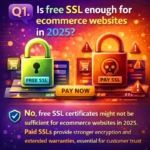
Yes, free SSL like Let’s Encrypt is fully secure for most ecommerce stores.
Q2. Q3. Can SSL slow down my ecommerce site?
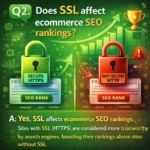
Yes, HTTPS is a confirmed Google ranking factor.
Q3. Can SSL slow down my ecommerce site?
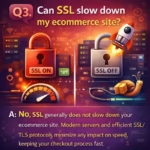
No, modern SSL actually improves performance with HTTP/2.
Q4. Is SSL required for payment gateways?
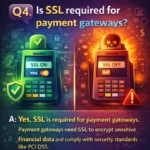
Yes, SSL is mandatory for PCI compliance and online payments.
Q5. What happens if my ecommerce site has no SSL?
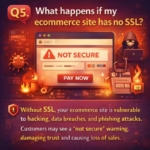
Browsers show “Not Secure,” hurting trust, sales, and SEO.