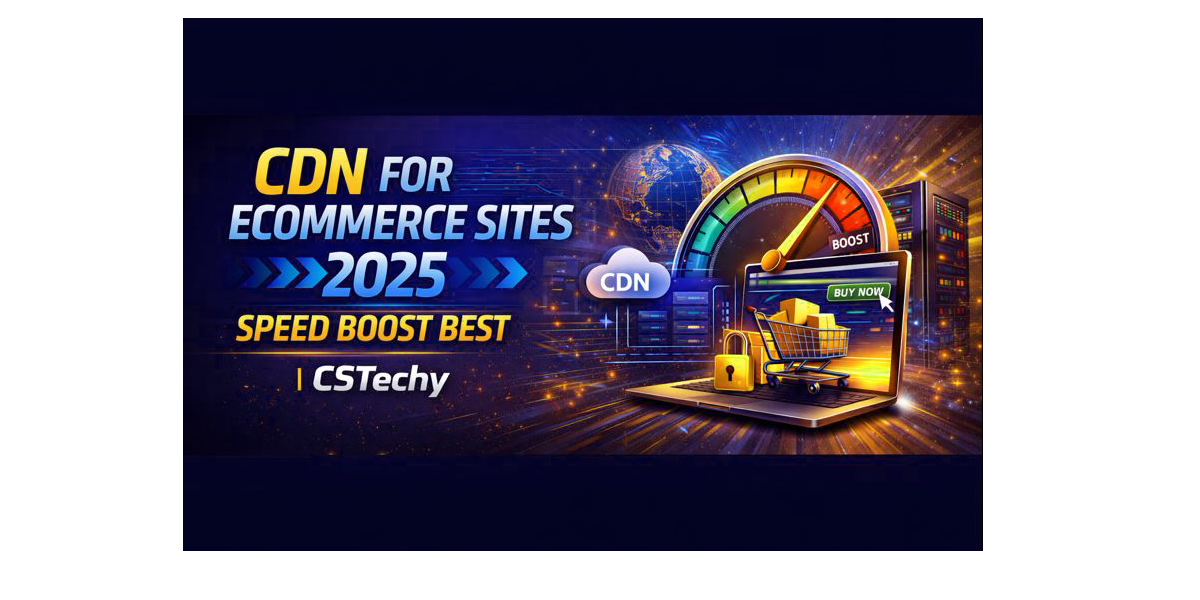
CDN for Ecommerce Sites – Speed Boost Guide | CSTechy
If your ecommerce website feels slow for users in different locations, products load late, images take time, or checkout feels laggy, this CDN for Ecommerce Sites – Speed Boost Guide by CSTechy will completely change how you look at website speed in 2025.
A CDN plays a crucial role in speeding up product pages, handling traffic spikes, and ensuring smooth checkout experiences for online stores. To see how CDN fits into a complete ecommerce hosting setup—covering performance, reliability, and scalability—refer to our ecommerce hosting performance guide , where we explain speed-focused hosting strategies for online stores.
In modern ecommerce, speed is not optional. Google uses speed as a ranking factor, customers abandon slow stores, and even payment gateways depend on fast server responses. A CDN (Content Delivery Network) is one of the most powerful tools to improve ecommerce speed — when used correctly.
This guide explains CDN in the simplest way possible: what it is, how it works, whether ecommerce sites need it, and how much speed improvement you can realistically expect.
What Is a CDN and Why Ecommerce Sites Need It in 2025
A CDN (Content Delivery Network) is a network of servers distributed across multiple geographic locations. Instead of loading your website from one main server, content is delivered from the server closest to the visitor.
For ecommerce sites, this means:
- Faster product image loading
- Reduced server load
- Better checkout performance
- Improved global user experience
Simple logic: Closer server = faster website.
How CDN Works for Ecommerce Websites (Simple Explanation)
Without a CDN, every visitor loads your site from one main server. With a CDN, static files like images, CSS, JavaScript, and sometimes dynamic content are served from nearby CDN nodes.
Example
- Main server in India
- User from Europe visits your store
- Without CDN → data travels long distance
- With CDN → data loads from nearby European server
This drastically reduces latency and improves load time.
Why CDN Is a Speed Booster for Ecommerce Sites
Ecommerce sites are heavy by nature: product images, sliders, scripts, payment scripts, and tracking tools. CDN offloads much of this load from your main server.
- Faster image delivery
- Reduced Time To First Byte (TTFB)
- Better performance during traffic spikes
- Smoother checkout experience
Result: Faster store = higher conversions.
CDN for Ecommerce Sites – Speed Impact on SEO
Google strongly considers speed signals like:
- Core Web Vitals
- Largest Contentful Paint (LCP)
- First Input Delay (FID)
- Page Experience
A properly configured CDN improves all of these metrics. This makes CDN a direct SEO booster for ecommerce sites.
Important: CDN does not replace good hosting — it enhances it.
Does CDN Replace Server Location? (Big Myth Explained)
One of the biggest misconceptions is that CDN replaces server location. This is only partially true.
- CDN helps deliver static content globally
- Dynamic content still depends on main server
- Checkout & database queries use origin server
Truth: CDN + nearby server = best performance.
Which Ecommerce Sites Should Use a CDN?
CDN is highly recommended if your ecommerce store:
- Targets users from multiple regions
- Has many product images
- Runs ads or influencer campaigns
- Faces traffic spikes during sales
- Wants better SEO performance
In 2025, almost every serious ecommerce site benefits from CDN.
CDN for WooCommerce vs Shopify Stores
WooCommerce + CDN
- CDN must be configured manually
- Works best with good hosting
- Offers maximum control
Shopify + CDN
- CDN included by default
- Less control, but easy setup
- Consistent global performance
WooCommerce users gain more flexibility. Shopify users get simplicity.
Types of CDN for Ecommerce Sites
1️⃣ Traditional CDN
Best for static content like images and scripts.
2️⃣ Smart CDN with Dynamic Acceleration
Improves dynamic content delivery and API responses.
3️⃣ Security-Focused CDN
Includes DDoS protection, firewalls, and bot blocking.
Common CDN Mistakes That Hurt Ecommerce Speed
- Using CDN with poor hosting
- Wrong cache rules for checkout pages
- Not excluding cart & account pages
- Ignoring CDN cache purge settings
Bad CDN setup can break carts and payments — configuration matters.
CDN for Ecommerce Sites – Speed Comparison Table
| Scenario | Without CDN | With CDN |
|---|---|---|
| Global Visitors | Slow | Fast |
| Image Load Time | High | Low |
| Traffic Spikes | Risky | Stable |
| SEO Performance | Average | Improved |
| User Experience | Inconsistent | Smooth |
FAQs – CDN for Ecommerce Sites
Does CDN really improve ecommerce speed?
Yes, especially for images and global users.
Is CDN required for small ecommerce stores?
Not mandatory, but highly recommended.
Can CDN break WooCommerce checkout?
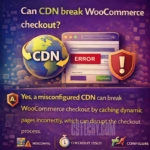
Only if misconfigured. Cart pages must bypass cache.
Does Shopify already use CDN?
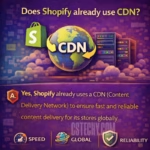
Yes. Shopify includes a global CDN.
Does CDN help SEO?

Yes. Faster pages improve Core Web Vitals.
Final Verdict – CDN for Ecommerce Sites (2025)
This CDN for Ecommerce Sites – Speed Boost Guide makes one thing clear: CDN is no longer optional for serious ecommerce businesses.
- CDN improves speed
- CDN improves SEO
- CDN improves conversions
Good hosting + smart CDN = ecommerce success.
— CSTechy Trusted Guide